
Standing on the metaphorical cliff of understanding, we find ourselves peering into the complex interplay between quantum mechanics and classical physics—two realms as intricately connected as they are distinct. At the core of this transition from the strange behaviors of tiny particles to the predictable world we know lies a foundational shift that could reshape our perception of reality.
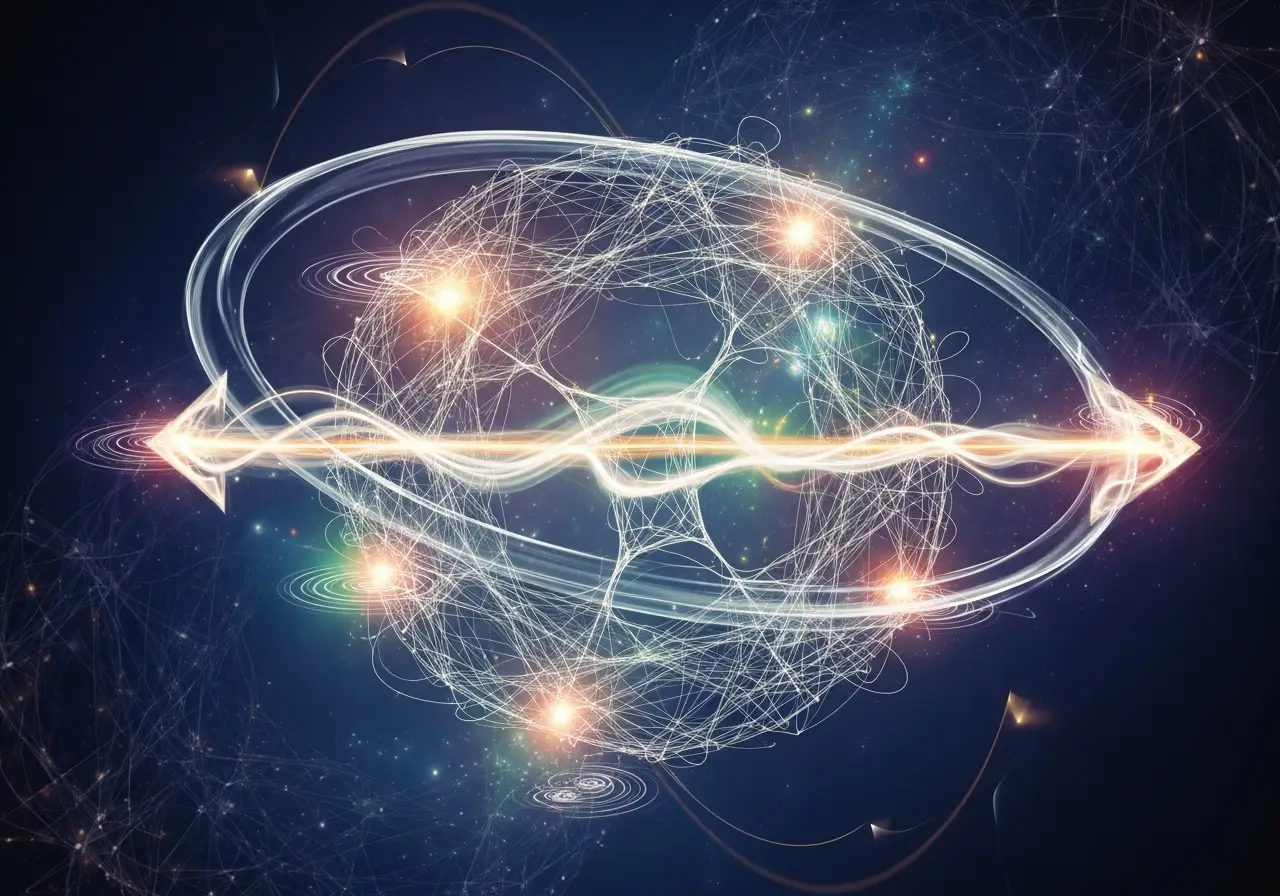
At its heart, the quantum world is a dance of possibilities. Particles exist in a state of potential, much like a firefly glowing in multiple colors as it flits through the darkness. This metaphor captures the essence of superposition—a phenomenon where particles occupy multiple states simultaneously. Yet, as dawn approaches, and the firefly becomes bathed in environmental light, it settles into a single state, transitioning to the classical realm we understand.
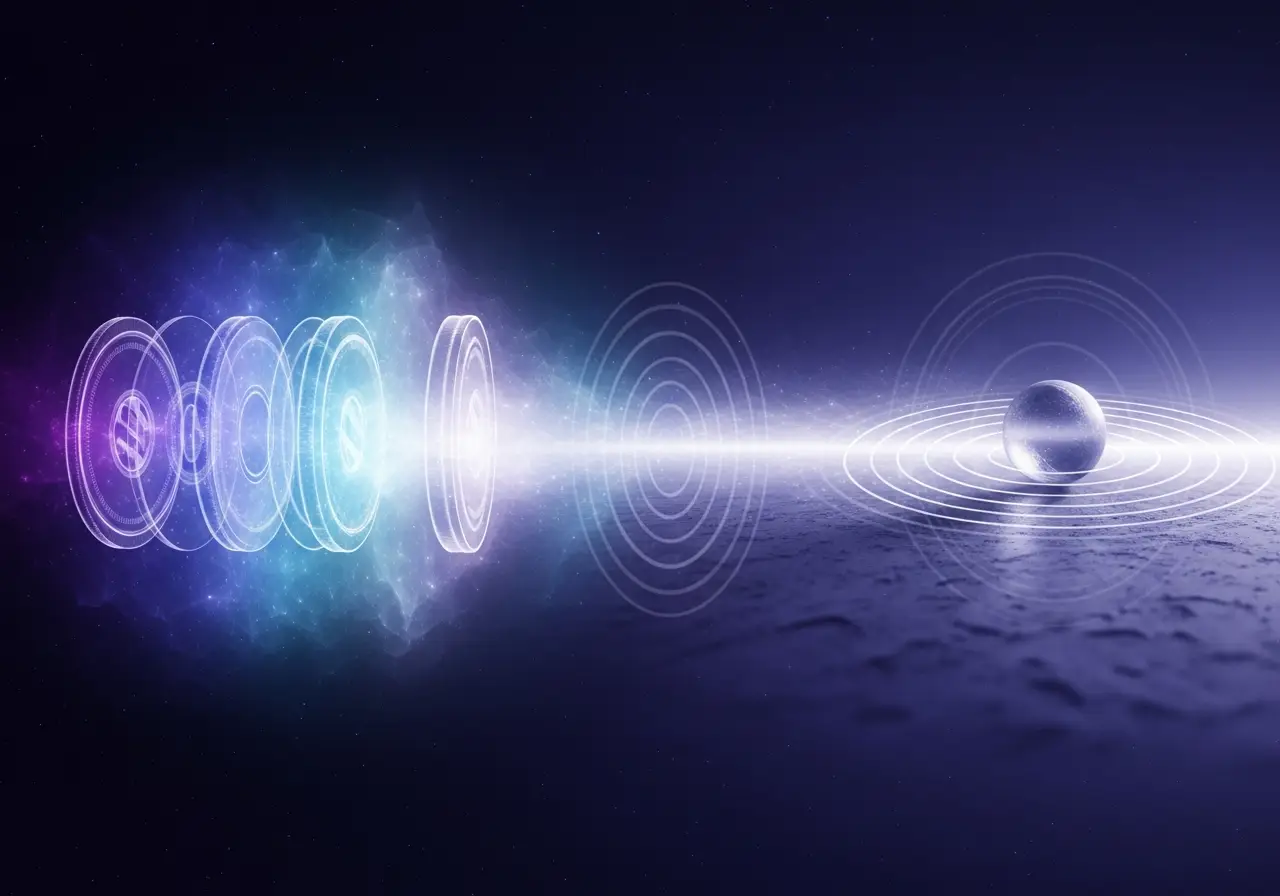
This transition isn’t just about particles selecting a definitive state. Decoherence plays a role here, subtly transforming the chaotic quantum dance into the orderly march of classical physics by interacting with the environment. Like a dance floor shifting to a more structured rhythm, decoherence gently nudges quantum systems toward familiar patterns we can observe.
The role of measurement adds another layer of intrigue. Observing a system can force it to ‘choose’ a state, prompting discussions about consciousness and its impact on reality. Does observing a firefly in a jar determine where it lands in the vast landscape of quantum states? This thought-provoking question continues to spark debate and investigation.
Furthermore, gravity may serve as a bridge between these realms. Acting like an authoritative presence, it encourages particles to conform, lending stability to the classical world. It raises questions about whether gravity itself influences this shift—a concept that invites us to rethink elements we take for granted.
Advances in technology—such as experiments with superconducting circuits—are shining light on this intricate dance between quantum and classical realms. These insights, far from mere academic curiosity, promise breakthroughs in fields from computing to communication, offering a glimpse into the future shaped by our understanding of these transitions.
Exploring the quantum-classical transition is more than just a scientific journey—it’s an invitation to revisit our relationship with existence. As we observe particles transform from quantum chaos to classical order, we’re reminded of the fireflies lighting up the night, each flicker a story of transformation. Through this lens, we embrace the universe’s complexities, enriched by the knowledge that each step brings us closer to the fundamental truths of our existence.