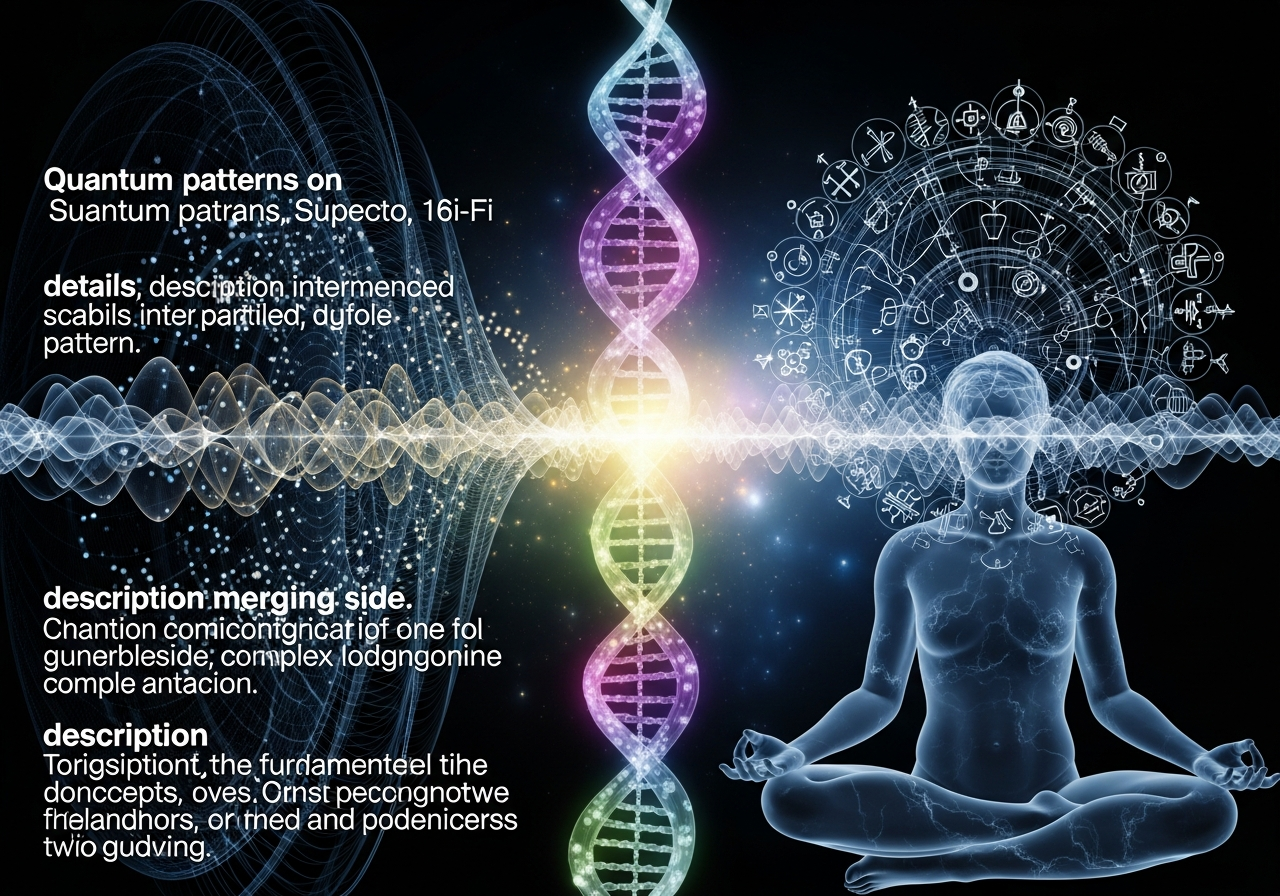

The fascinating world of quantum mechanics unveils a universe where particles behave in ways that defy conventional understanding. At the heart of this peculiar phenomenon lies the Complementarity Principle, which suggests that entities like light possess dual characteristics—acting both as particles and as waves. This insight challenges the way we perceive reality, illustrating that context and observation shape our experiences.
Imagine it this way: when you examine light closely, it appears as particles, solid and definite. Yet, when you step back, it shifts into waves, fluid and boundless. Such versatility in nature mirrors our own lives, where different circumstances call forth varied aspects of our personalities. There are times we march forward with self-assured purpose, and moments when we introspectively retreat, exploring quieter depths.
This duality echoes beyond physics, touching on our self-awareness and interactions. As waves find clarity through coherence, we, too, achieve balance by aligning our emotions and actions. It’s not about being fixed in one state but flowing between roles and emotions—rich with complexity and depth.
Our quest for simplistic views often overlooks the richness of dualities. By embracing these complexities, we engage more fully with life’s mosaic. Just as the Complementarity Principle suggests that observation can shift reality, so can our perspectives shape the narratives we create. Instead of confining life to rigid categories, let us navigate it with openness—embracing both the chaos and beauty inherent in existence. In this dance, we become both creators and participants in shaping an ever-evolving reality.