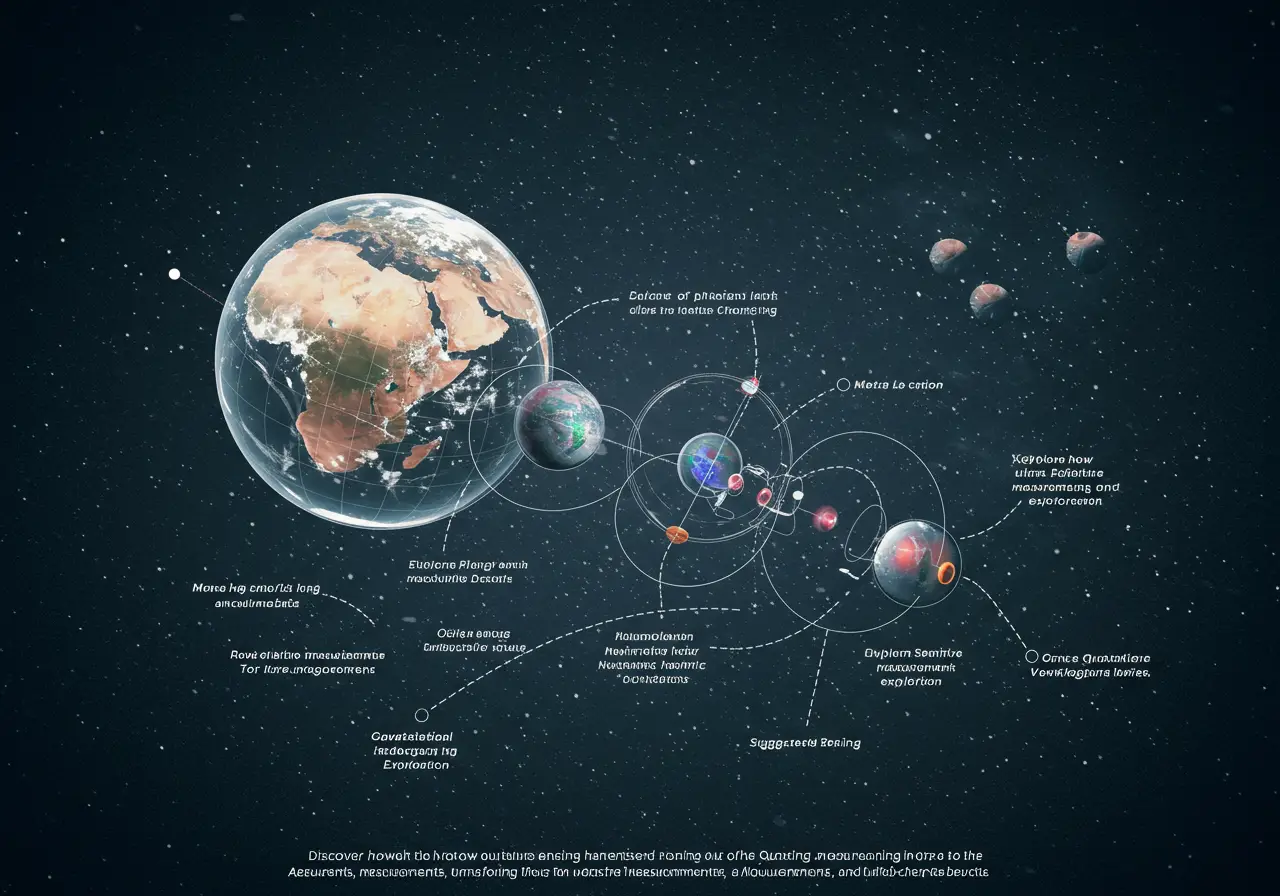

At the brink of our understanding, quantum mechanics teases the boundary between our familiar world and a realm of probabilities and contradictions. Enter the CHSH inequality experiment—a bold venture testing the limits of classical and quantum physics. This isn’t just about numbers; it’s a revealing exploration into whether our universe behaves predictably…or dances to a tune of unseen possibilities.
Imagine this: two observers, Alice and Bob, examine particles that, despite being worlds apart, communicate as if distance is an illusion. Their task? To see if their results defy classical expectations, using the CHSH inequality as their guidepost. Scores beyond a certain point (the magic number is 2) suggest our universe doesn’t always adhere to the old rules, with quantum theory stepping in to challenge our core assumptions.
Why does this matter? Because if Alice and Bob consistently find results surpassing the classical limit, our grasp on reality shifts fundamentally. We’re talking about quantum entanglement breaking the mold, a peek behind the curtain into a world where particles influence each other without direct contact. It’s like discovering that the familiar rules of a game don’t apply, and perhaps they never have.
Recent experiments do more than hint at this reality—they suggest a definitive shift. These findings push us to reconsider how we perceive interactions, not just at the particle level, but potentially across broader scales. With practical implications for computing and communications, this isn’t some abstract theory; it’s setting the stage for technological advances that could reshape our society.
But beyond practical applications, there’s an even grander implication: the question of whether our universe is guided by hidden structures or the whimsy of quantum oddities. Loopholes in our classical understanding—how information can seemingly defy time and space constraints—force us to confront profound questions about free will and determinism.
This is not merely academic. The insights gained here could ultimately lead to innovations in technology, like quantum computing, offering breakthroughs unimaginable within the confines of classical physics. And as we dig deeper, we might find ourselves redefining our place in the cosmos—our choices, as perceived or real as they may be, influencing a universe that always seems one step ahead of our understanding.
Are we ready to embrace these shifts in perspective? The choice might not be entirely ours, but the journey promises to be exciting as we continue to unravel the universe’s mysteries through the lens of quantum mechanics. This exploration is far from over, and every new discovery brings us closer to a future where the universe itself is a much more surprising companion than we ever dared to dream.