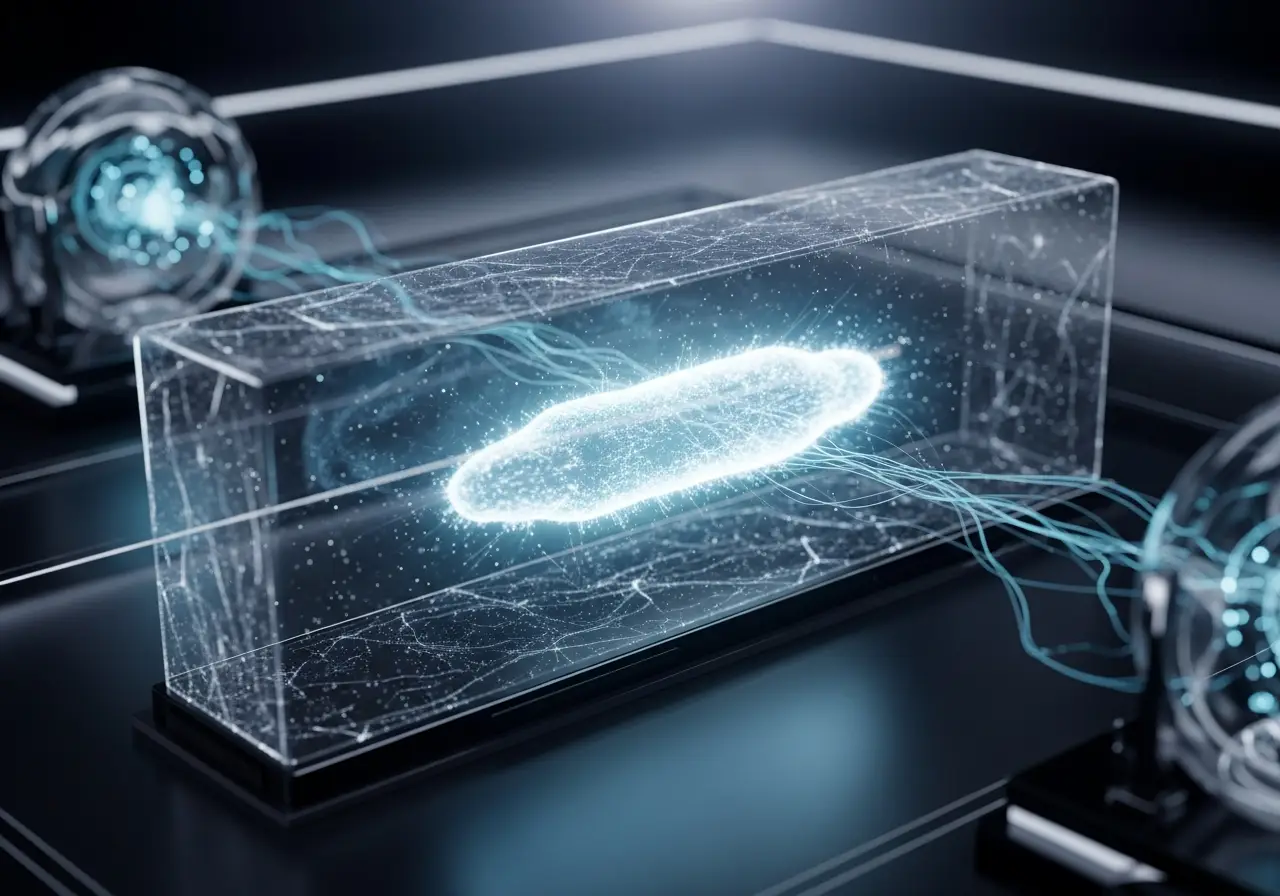

Imagine what it would be like to pause a beam of light, holding it delicately in place before letting it continue its journey. This extraordinary concept isn’t a far-off fantasy but a tangible achievement that researchers have recently managed to grasp. By immobilizing light, they’ve opened the gateway to innovative applications in communication and computing.
Think about it: light is the universal sprinter, constantly on the move, faster than anything else we know. What if that race could be halted, offering you time to absorb the scenery of its trajectory? The implications of such a feat stretch far beyond mere physics—they have the potential to redefine communication systems, offering unprecedented speed and efficiency by overcoming existing constraints.
The crux of this breakthrough lies in manipulating photons with atomic gases, skillfully slowing and halting them with precision. This doesn’t just allow for theoretical musings—it paves the way for real-world applications. Imagine communication systems that operate with a fluency reminiscent of thought itself, or quantum computers that handle complex calculations with ease, thanks to stable qubit states reserved by immobilized light.
Beyond tech innovations, this achievement nudges us to ponder our relationship with reality. If we can still the speediest of particles, what else might become possible? It’s these kinds of insights that push humanity’s boundaries, inviting a rethinking of how we perceive time and existence.
As researchers delve deeper into the nuances of light and its applications, we stand on the brink of a new horizon. This remarkable achievement urges us to reconsider what we thought we knew, blending scientific inquiry with philosophical thought and practical advancements. The journey of understanding and utilizing stopped light has only just begun, promising a future that’s as bright and captivating as the light itself.