
Envision a reality where the speed of light isn’t a fixed constant but a variable to be explored and manipulated. This isn’t a figment of imagination, but a fascinating truth that scientists are unraveling. Through groundbreaking experiments, we’ve learned to slow down light, observing how it meanders through diverse materials rather than rushing across the universe.
Let’s explore this phenomenon not as distant observers, but as participants in a dramatic shift in understanding physics. Light, often perceived as a steadfast beacon of speed, defies this notion when interacting with different media. Here, light slows down—sometimes to a pace so leisurely, it’s hard to believe. This is no magic trick but the result of coherent interactions, where photons traverse materials like a well-tuned orchestra.
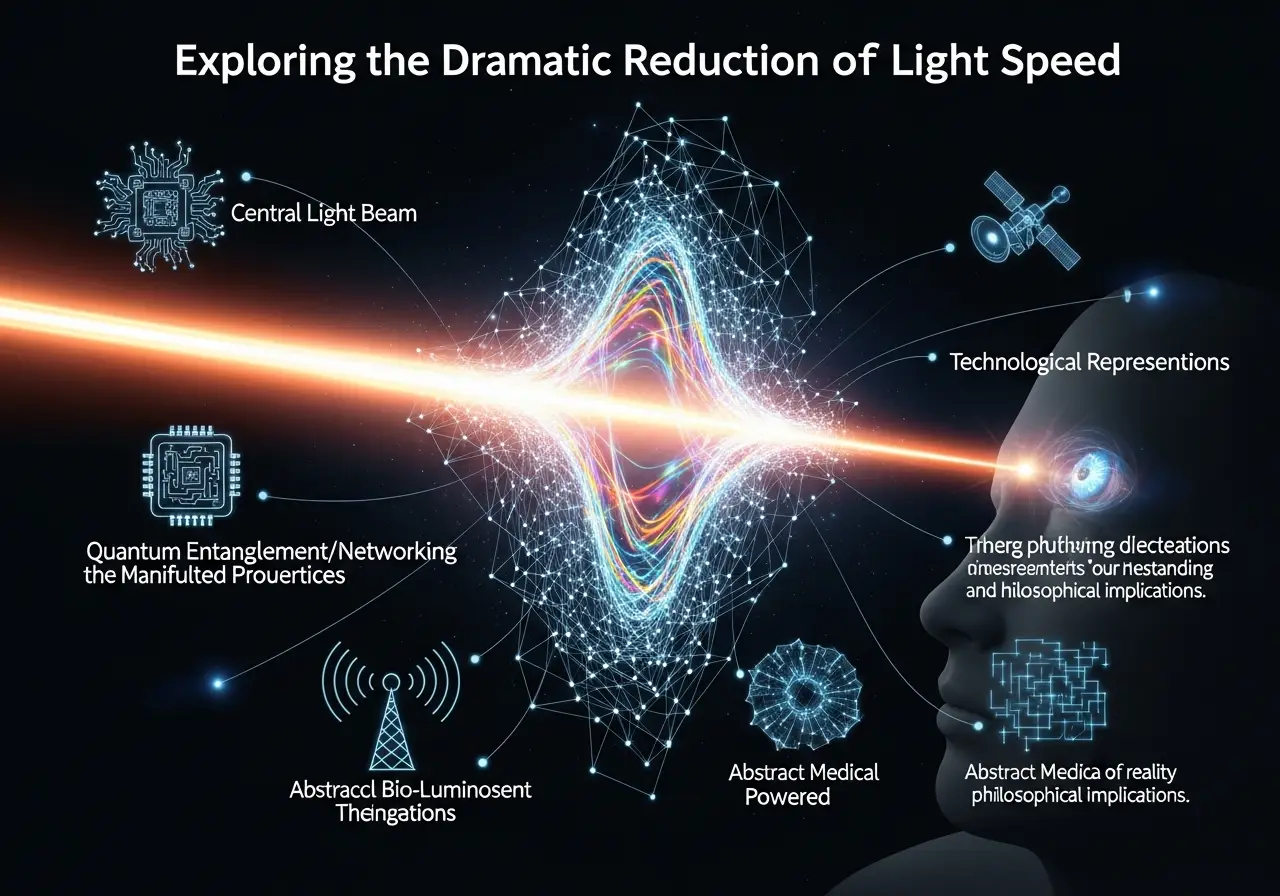
In quantum terms, the concept of coherence orchestrates this slowdown, offering us a new frontier in technology. Imagine communications systems where information moves at a deliberate pace, enhancing security and precision. This could catalyze a transformation in telecommunications, a realm where speed once reigned supreme.
The implications of controlling light speed reach beyond technology, nudging us towards philosophical musings. What if light, a cornerstone of perception, becomes fluid? How might this redefine our understanding of time and reality?
On a practical level, slow light opens doors to innovations in quantum computing. Here, the careful choreography of light could enable quantum bits to function with unparalleled efficiency. Picture networks operating with a rhythm dictated by manipulated photons, mainstreaming the promise of quantum technologies.
Moreover, imagine medical diagnostics that leverage slow light for unprecedented accuracy, or therapies that manipulate cellular behavior with light’s altered pace. These developments hint at a world where our control over light shapes our interaction with reality.
As researchers dive deeper into the nuances of slow light, we’re not only pushing the boundaries of what’s technologically possible but also challenging the limits of our understanding. Our journey with slow light uncovers more than breakthroughs; it reshapes how we perceive and interact with the cosmos. The next time a ray of sunlight graces your day, ponder the complex dance of speed and stillness inherent in its journey, reminding us of the boundless potential that lies within our grasp.