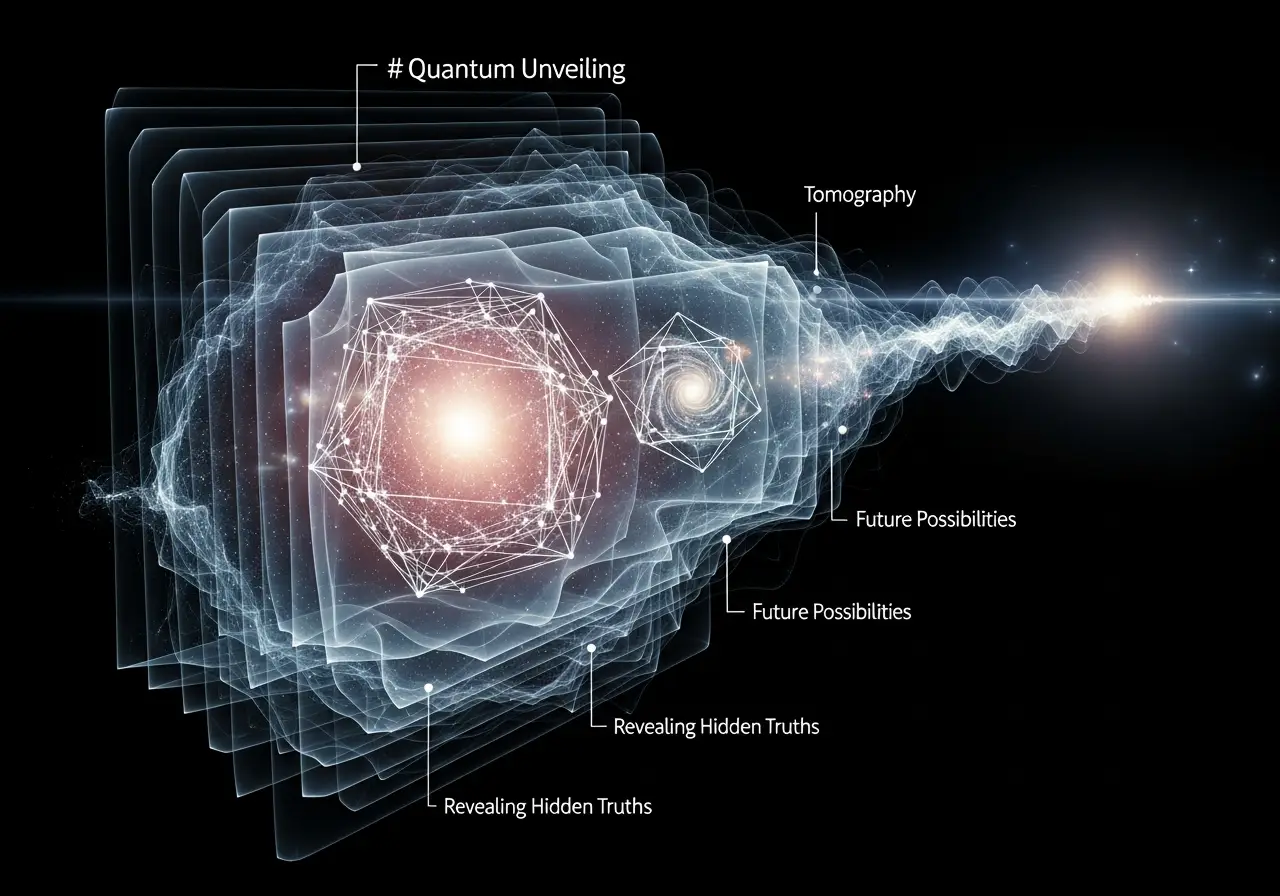

Peeling back the layers of quantum reality, we encounter a realm where particles defy conventional logic, existing in myriad states simultaneously. This is the domain of Quantum State Tomography (QST)—a sophisticated toolset that allows us to construct a comprehensive view of quantum systems. Like detectives armed with insights drawn from mysterious quantum dances, we piece together the truths hidden within the superpositions and entanglements that form the backbone of the universe.
QST offers a fascinating glimpse into how seemingly abstract quantum phenomena can have tangible implications. Start with its core function: assembling a coherent picture of a quantum state through varied measurements, akin to capturing different views of a precious gem. This analogy illustrates how QST deciphers the complex relationships between particles, much like a savvy storyteller unraveling a dramatic narrative.
One technique, Maximum Likelihood Estimation (MLE), scrutinizes measurements to infer the most credible state of the system. It’s a careful balancing act, much like evaluating a collection of artworks to identify the most authentic pieces. Meanwhile, compressed sensing borrows from data science to reveal quantum states with fewer measurements, showcasing how select details can map out vast understandings.
The impact of QST transcends scientific curiosity. Amidst the rapid advancement of quantum technologies, QST is crucial for designing robust quantum computers and communication systems. Picture a future filled with hyper-secure communication networks, where traditional eavesdropping becomes an impossibility.
QST isn’t just about understanding the quantum world; it’s about bridging the gap between abstract theory and practical innovation. Whether enabling breakthroughs in computational power or redefining secure communication, QST represents an exhilarating frontier where science meets the seemingly magical.
Embrace this journey into the quantum tapestry and ponder the possibilities lying just beyond the current horizon. As we unravel the complexities of QST, we’re not just learning about the universe—we’re actively shaping a future where such knowledge could redefine reality itself.