
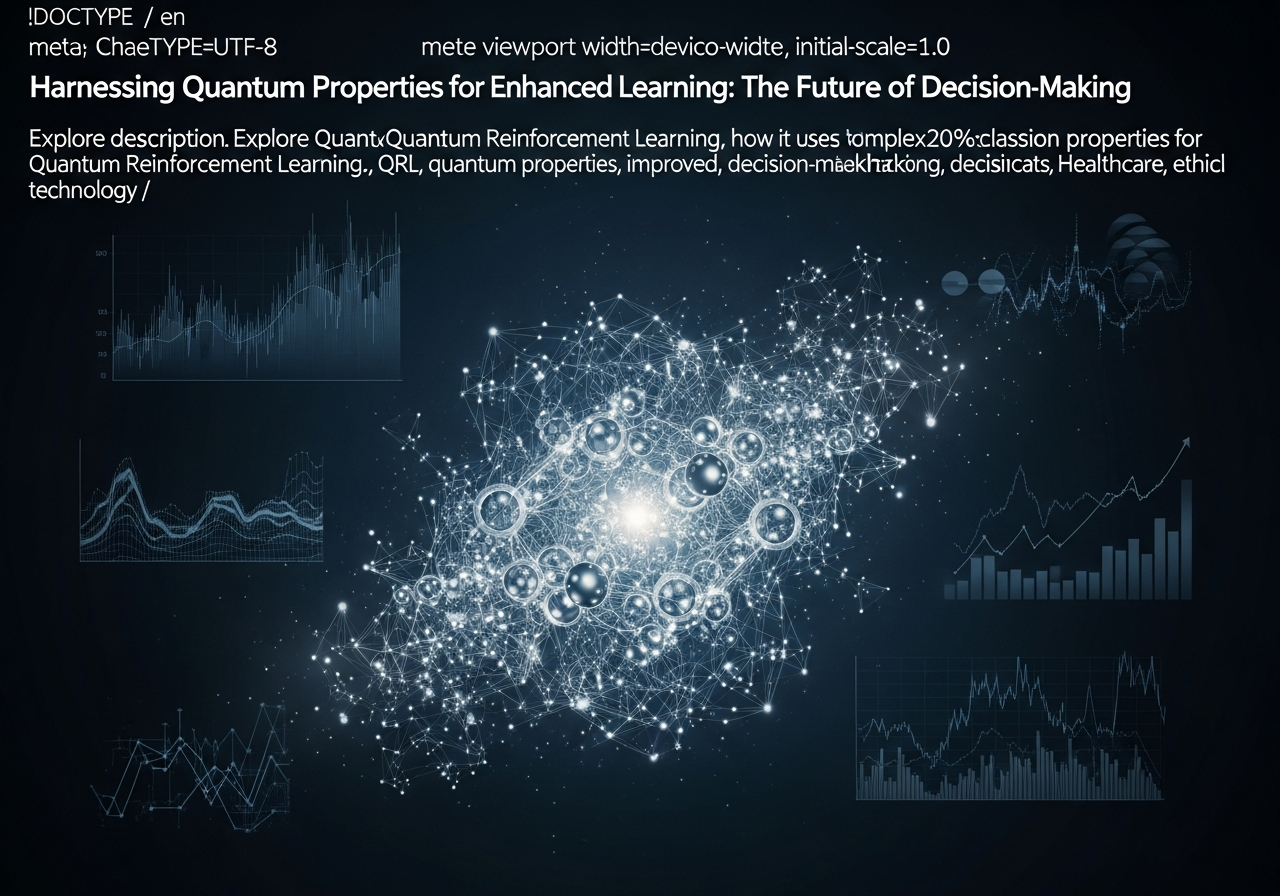

At first glance, Quantum Reinforcement Learning (QRL) seems like it belongs in the realm of sci-fi. Yet, it’s real and holds promise for transforming how we make decisions. Imagine using the perplexing properties of quantum mechanics to supercharge our learning systems, allowing them to consider countless possibilities almost instantaneously.
In traditional methods, algorithms learn laboriously, like students navigating unfamiliar terrain, frequently revisiting the same mistakes. QRL disrupts this pattern by utilizing quantum states that allow algorithms to explore multiple paths simultaneously, leading to faster and more efficient learning. It’s like equipping those students with a map that continually updates with every step they take.
The benefits could be enormous. Financial markets, for example, could stabilize as algorithms, with QRL, forecast trends with precision. In healthcare, personalized treatments could evolve with each patient interaction, adapting seamlessly. However, alongside these advances, we face ethical dilemmas. We must tether these powerful technologies to strict ethical standards, ensuring they amplify human well-being rather than undermine it.
In embracing QRL, we’re not just pushing boundaries in technology but recalibrating our approach to problem-solving. It offers a future where decisions are not merely reactive but deeply informed by the underlying rhythms of the quantum world. Yet, the fundamental question remains: as we journey into this new frontier, how do we balance innovation with responsibility? This exploration isn’t just about technological possibility; it’s about shaping a future that is both advanced and ethical.