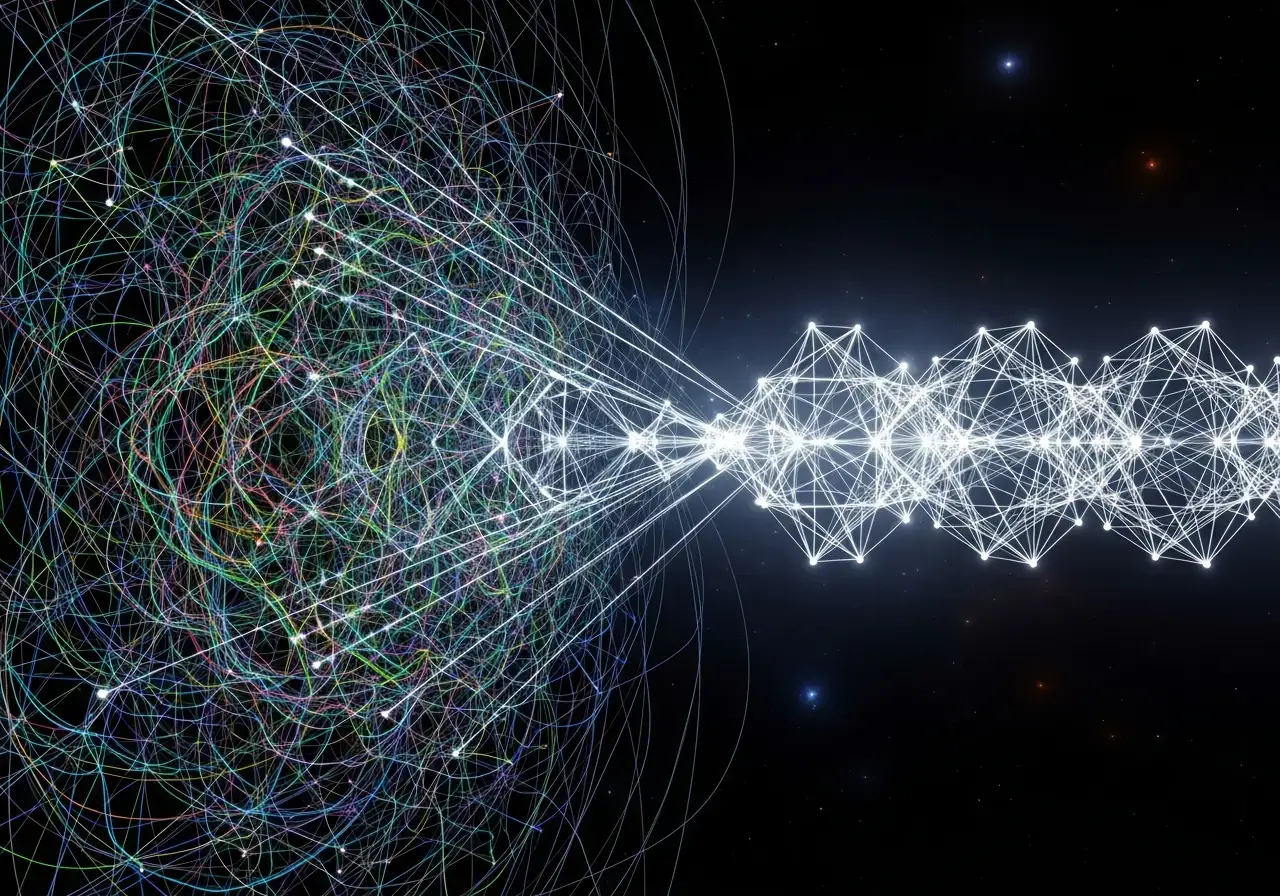


Picture a universe that isn’t as fixed as it appears, but rather a swirling dance of particles and energy in perpetual motion. At the heart of this captivating chaos lies a theoretical notion within quantum mechanics called Objective Collapse Theory. It suggests that reality isn’t merely waiting for us to observe it—it’s actively engaging with the physical processes that lead to wave functions collapsing and realities forming.
Objective Collapse Theory (OCT) challenges the classical quantum notion where observation is the catalyst for change, such as Schrödinger’s cat being both alive and dead until observed. OCT posits that physical interactions—not the wanderings of the human gaze—dictate these collapses. Imagine reality as an intricate cosmic dance, choreographed by the laws of physics rather than a conscious spectator.
This theory encourages a rewriting of causality. Where once consciousness was thought to be the decision-maker in the quantum realm, now it’s physical forces—like gravity—that dictate outcomes. It’s like envisioning a colossal game of Jenga, where each block’s fate is determined not by sidelong glances but by the tug of unseen cosmic hands.
Consider the GRW theory, a tangible expression of Objective Collapse. It proposes spontaneous and observation-independent collapses, akin to the random upheavals within a fluid system. Imagine being on a surfboard, every once in a while receiving an unexpected wave from the ocean itself. Such processes have far-reaching implications for how we engage with technology, particularly quantum computing and telecommunications.
Objective Collapse could serve as a bridge between quantum mechanics and general relativity, two often discordant theories seeking common ground. As we understand how gravity might influence quantum activities, the path to a unified theory revealing the universe’s intricacies stretches before us.
As we engage with Objective Collapse Theory, we step beyond mere observership. We’re participants in a reality that shapes itself and is shaped by our actions and choices. This understanding prompts us to consider the ethical dimensions of our actions, as they ripple far beyond our immediate sphere.
In examining these sophisticated dynamics, Objective Collapse guides us to uncover the intrinsic properties of the universe. We realize that while we may weave the cosmic narrative with each decision, the universe itself dances to the tune set by its inherent physical laws. Rather than observing from the sidelines, we are invited onto the dance floor, engaging deeply in existence’s grand display. As we embark on this journey, each action stitches another piece into the expansive tapestry of our reality.