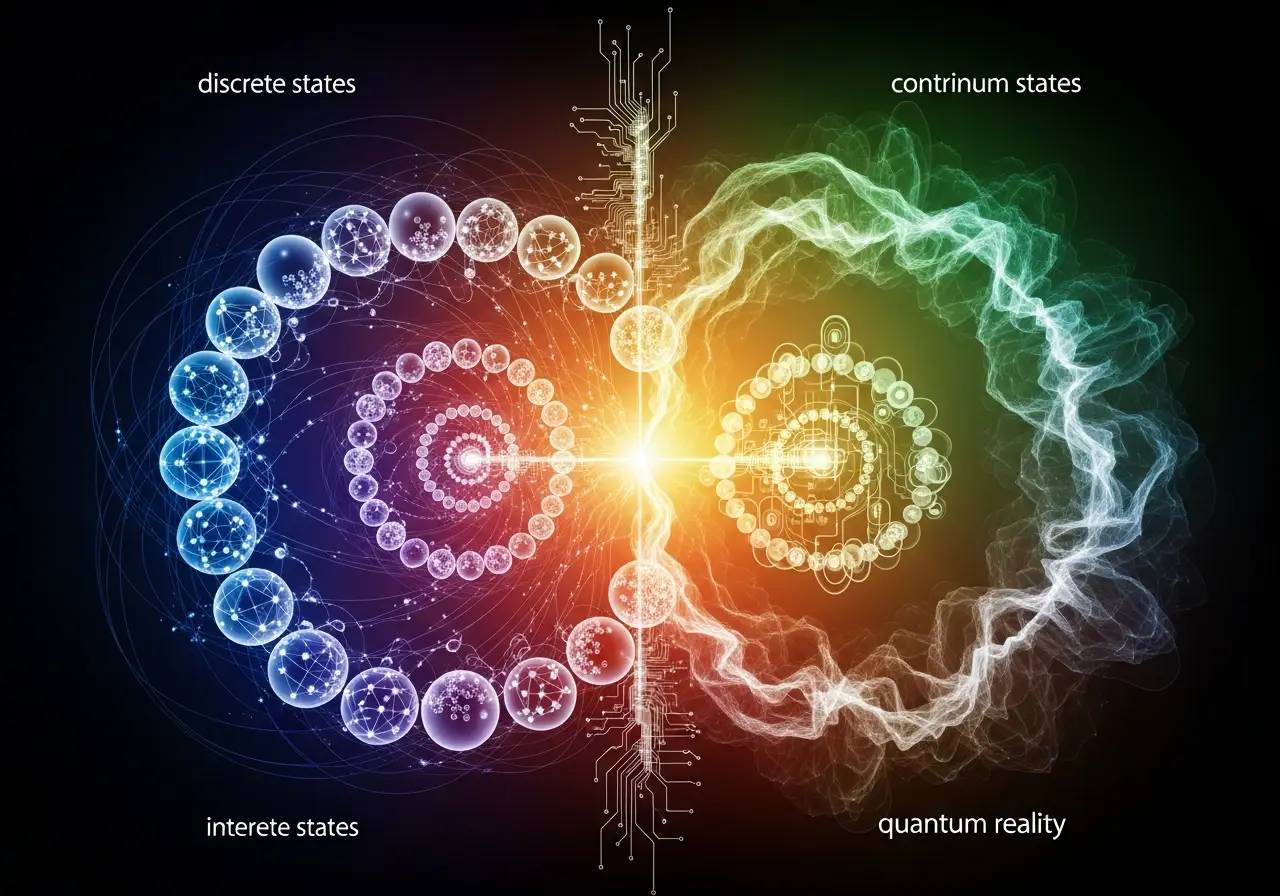

Fano Resonance might sound like a complex term, but let’s break it down into something relatable. Picture yourself at a bustling party, trying to have a conversation. The noise around you ebbs and flows, and sometimes you catch every word clearly while other times, your voice blends into the chaos. This mirrors the dance between two quantum states—discrete and continuum—much like trying to communicate amidst the party’s ambient sound.
In the world of quantum physics, Fano Resonance arises when an external influence, or perturbation, enters the scene. Think of it as adding a new sound to that crowded party, changing the entire dynamic. These interactions are akin to whispering secrets in the midst of a vibrant gathering, where every interaction shapes the atmosphere.
Understanding how discrete states—like fixed islands in an ocean—and the continuum—an endless sea—interact, provides insights into the fabric of the universe itself. It’s not just about particles acting in isolation; it’s a reminder of how every interaction resonates beyond itself, like ripples on water.
This interplay isn’t merely academic. It has real-world applications, hinting at the possibilities in quantum computing and new technologies. It challenges us to perceive both the scientific universe and our tangible world through similar lenses: a tapestry of interactions, collective energies, and choices influencing our reality.
The takeaway? Recognize the intricate dance we’re part of, whether we’re interacting with theories or living our lives. Each moment is a note in a symphony, where our actions and decisions create harmonious or discordant influences in the world around us. So, stay curious and know that your presence, much like Fano Resonance, is part of something much bigger.