
Imagine a world where light becomes more than just illumination—it transforms into a dance partner, responding to the rhythms of quantum interference. This is the wonder of Electromagnetically Induced Transparency (EIT), a scientific marvel that turns the concept of light manipulation into reality. It’s a means to an end that once seemed reserved for the imagination—bending light, rendering objects virtually invisible, and exploring the depths of quantum mechanics. Let’s explore this intriguing phenomenon that offers us a new perspective on the science of light.
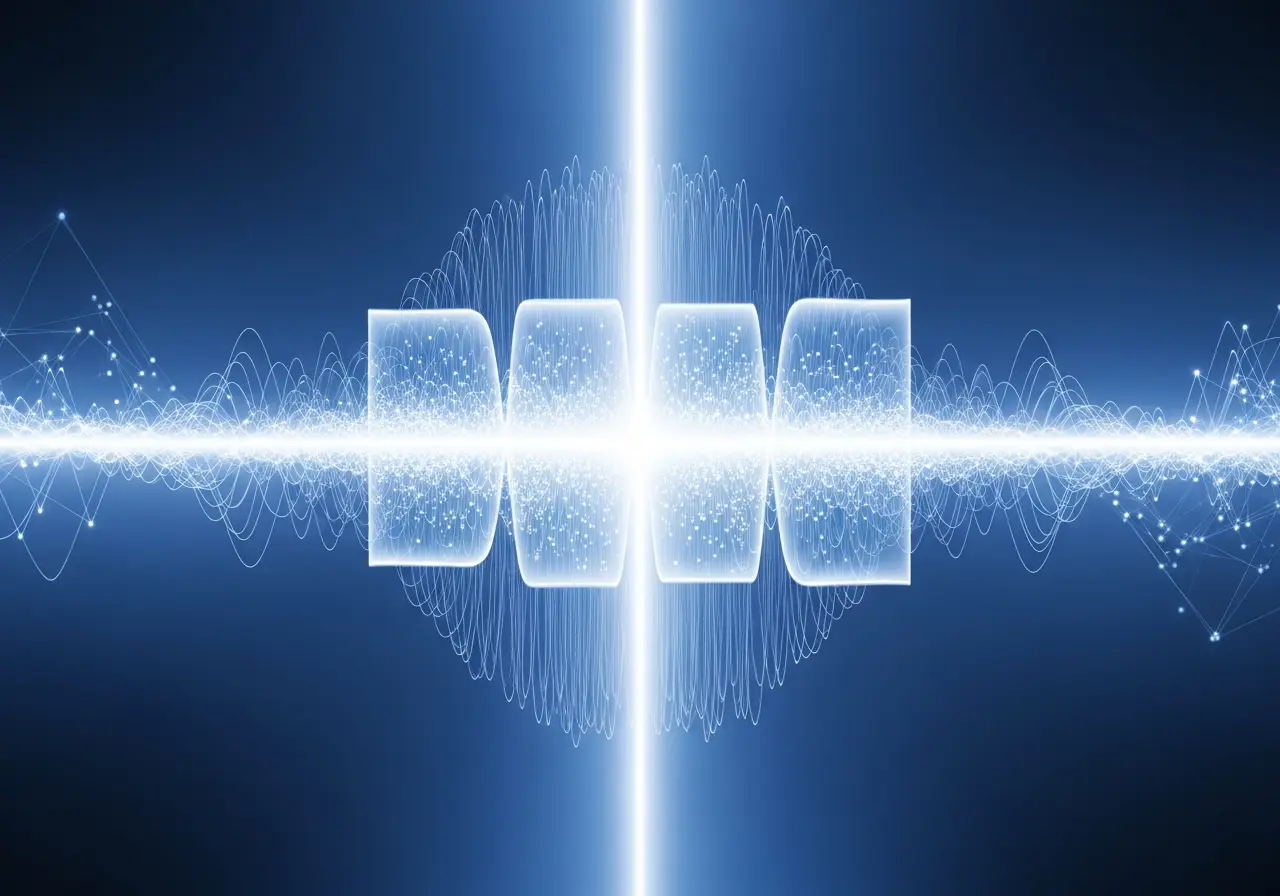
EIT takes on the challenge of altering how light interacts with materials. Picture this: Photons, the very particles of light, can be controlled to pass through opaque substances as if they didn’t exist; it’s all about creating transparency for specific wavelengths. This doesn’t mean the magical disappearance of objects, but rather a controlled passage that transforms the opaque into the see-through. Using a blend of lasers and magnetic fields, EIT enables light to follow a path that would typically be blocked, all thanks to quantum interference. It’s as if light has learned to navigate through secret passages, selectively interacting with the material world.
But why does this matter? Consider the possibilities in communication. With EIT, data can travel without significant loss, a potential shift in how we handle information. Imagine a highway where the flow of traffic never jams, where light slows down without interference or loss of detail. This isn’t just useful for faster internet—it’s about creating secure communication lines free from eavesdroppers, laying the groundwork for robust encryption. The implications ripple through quantum computing, where processing speeds could soar to once-unthinkable heights.
This journey with EIT isn’t without its hurdles. The dance of light requires meticulous balance; the coherence of states must be carefully maintained. It’s akin to walking a tightrope, where a step out of line disrupts the process. Despite these challenges, the potential rewards are vast and fascinating.
In the end, EIT shows us a future where light is more than just a passive force. Through its manipulation, we see a path forward for technological advances and innovations beyond our current capabilities. So, whether you’re a scientist envisioning applications or simply someone captivated by the dance of light, EIT invites us all to explore and create a future filled with possibilities.