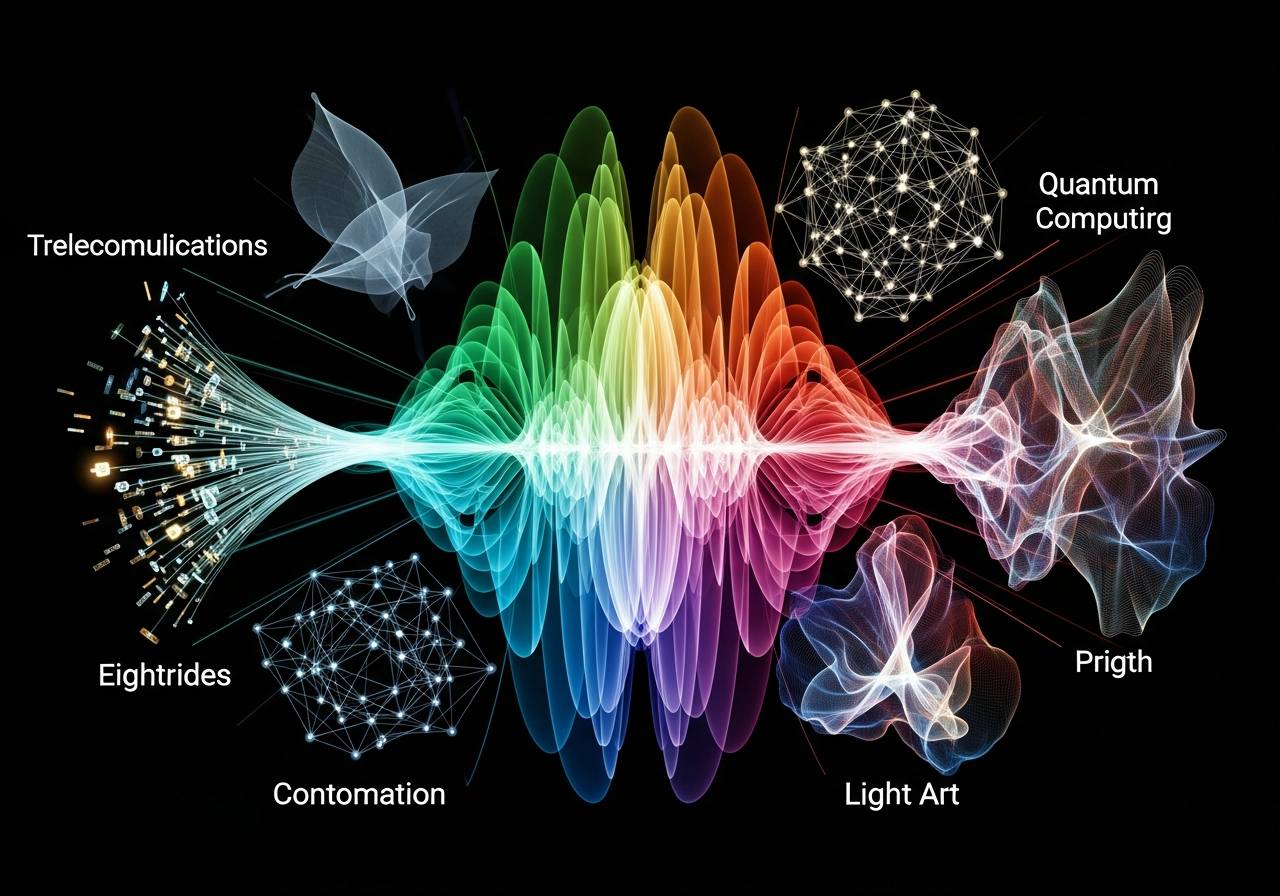

Imagine waves crashing on a beach; some combine to create a towering wave, while others cancel each other out, leaving the shoreline undisturbed. Similarly, EIT relies on the cancellation and reinforcement of light waves to produce its unique effects. By carefully tuning the frequencies of the interacting lasers, scientists can control which frequencies can pass unhindered through the medium, effectively making the previously opaque material transparent to certain wavelengths. This wondrous ability offers more than aesthetic pleasure; it harbors practical implications for telecommunications, quantum computing, and beyond.
EIT holds a treasure trove of potential applications that may leave even the most seasoned sci-fi fan breathless. Imagine quantum networks that use EIT to create more efficient ways of transmitting information, changing the dynamic of our digital connections. Remote sensors might become meticulous observers of the imperceptible, utilizing EIT to track data with exceptional precision, influencing fields from environmental science to healthcare.
And there’s room for artistry in this scientific tapestry. Picture light artists crafting displays that don’t just illuminate but interact and transform, creating installations that challenge perception and invite deeper reflection. By leveraging EIT, these artists gain the tools to manipulate space and time with light, crafting immersive experiences where light responds to the viewer’s presence.
Behind such awe-inspiring applications lies rigorous research. By untangling the complex principles of quantum mechanics, scientists continue to drive this technology forward, opening new frontiers. Each discovery sheds light on the intricate dance between light and matter, providing a fertile environment for groundbreaking advancements.
Yet, as we inch closer to mastering light manipulation, ethical considerations must remain paramount. These advancements should not only propel technological progress but should also account for privacy, security, and environmental stewardship. Striking this balance is essential to ensure that the development of EIT benefits society while maintaining sustainable practices.
EIT represents more than technological evolution; it echoes a partnership between science and creativity. Through it, we don’t just observe the universe—we engage with it, crafting and reimagining the very fabric of reality. Are you ready to explore this frontier, where science and art merge to redefine our understanding of what is possible?