
“What Is Electromagnetically Induced Transparency and How Will It Transform Our Interaction with Light?”
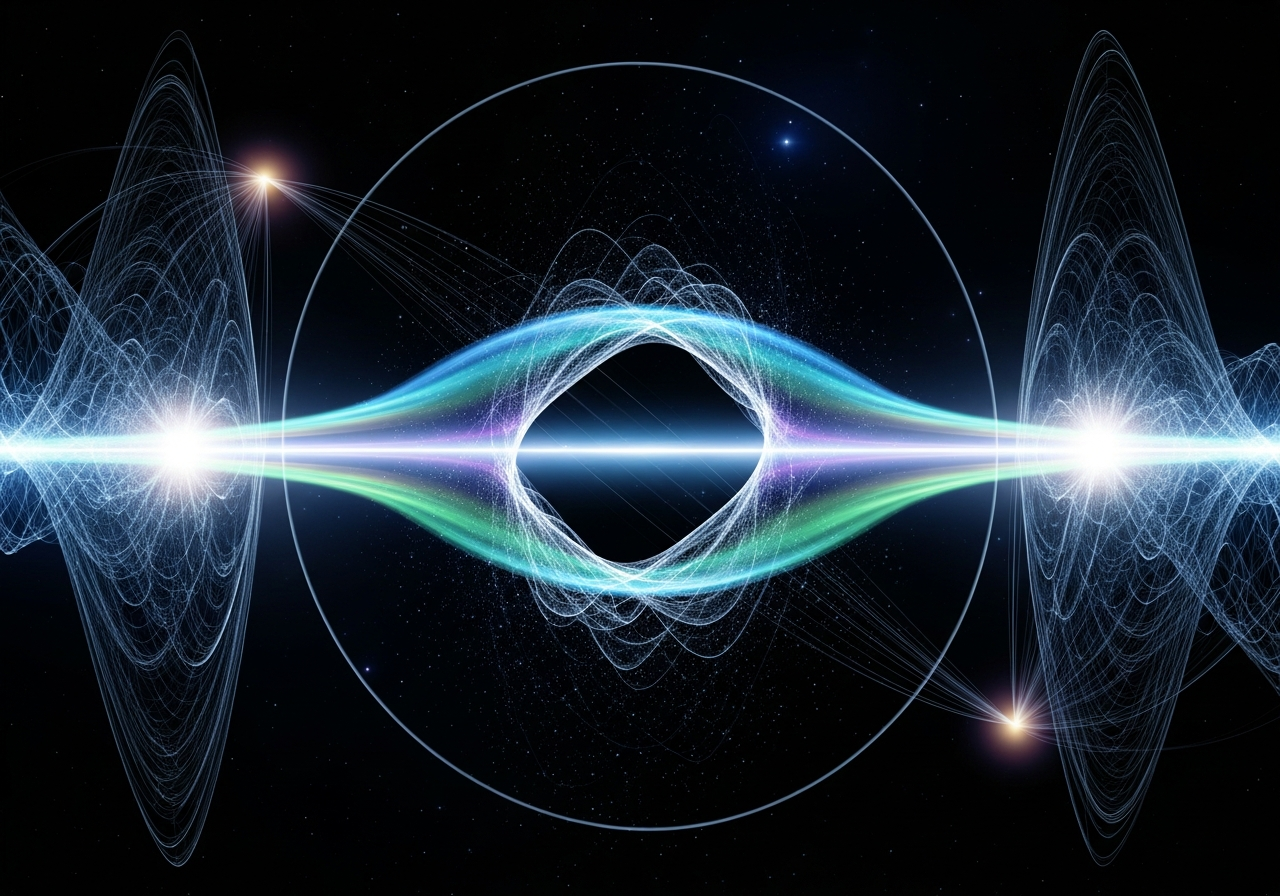
Imagine a world where you can shape light just as easily as playing a melody on a piano. We’re on the edge of a breakthrough in technology, using the intriguing principles of quantum mechanics to alter light in remarkable ways. Welcome to the field of Electromagnetically Induced Transparency (EIT), where the magic of quantum interference opens up new possibilities for manipulating light. This isn’t just theory—it’s a fast-evolving field poised to transform industries and redefine our interaction with light.
At the core of this advancement lies quantum interference—think about how two waves on a pond might meet, either amplifying or cancelling each other out. In the quantum realm, photons engage in a similar dance. EIT takes advantage of this, placing atoms in superposition—allowing them to exist in multiple states at once. These states can selectively block or transmit light, reshaping our control over electromagnetic waves.
Consider the impacts on daily life—we could see leaps forward in telecommunications and imaging systems. High-speed internet might become effortless, and medical imaging could reach new levels of precision, revealing the body’s complexities with clarity. The potential applications stretch as far as our creativity can take them.
So, how does EIT actually work? It starts with directing a powerful “control” laser onto a medium with specifically chosen atoms. This laser creates a quantum interference pattern, allowing incoming light to interact in a novel way. The light neither fully absorbs nor transmits—it waits, allowing us to modulate its flow with remarkable precision.
One of the most fascinating abilities of EIT is creating “slow light.” Picture trying to admire a sunset while speeding by in a train—now imagine pausing time to enjoy it fully. EIT can emulate this, slowing light to a near standstill, opening doors for new information processing techniques.
Yet, achieving EIT isn’t without its challenges. It requires precise conditions and fine-tuning—much like a chef perfecting a gourmet dish. Though we’re on the verge of monumental advancements, mastering EIT involves a blend of complexity and perseverance.
Ultimately, EIT offers more than just technological progress; it promises to revolutionize our engagement with light itself. As we explore these new dimensions, it’s crucial to remember that we are active participants in this journey. So, whether you’re an innovator in the lab or curious about the possibilities, prepare for a future where light is not just a source of illumination but a tool for creativity and exploration.
By harnessing EIT’s capabilities, we invite you to embrace a new era where light serves both as our canvas and our partner in innovation. Welcome to the transformative realm of Electromagnetically Induced Transparency, where light doesn’t just show us the world—it dances with us in its discovery.
Leave a Reply