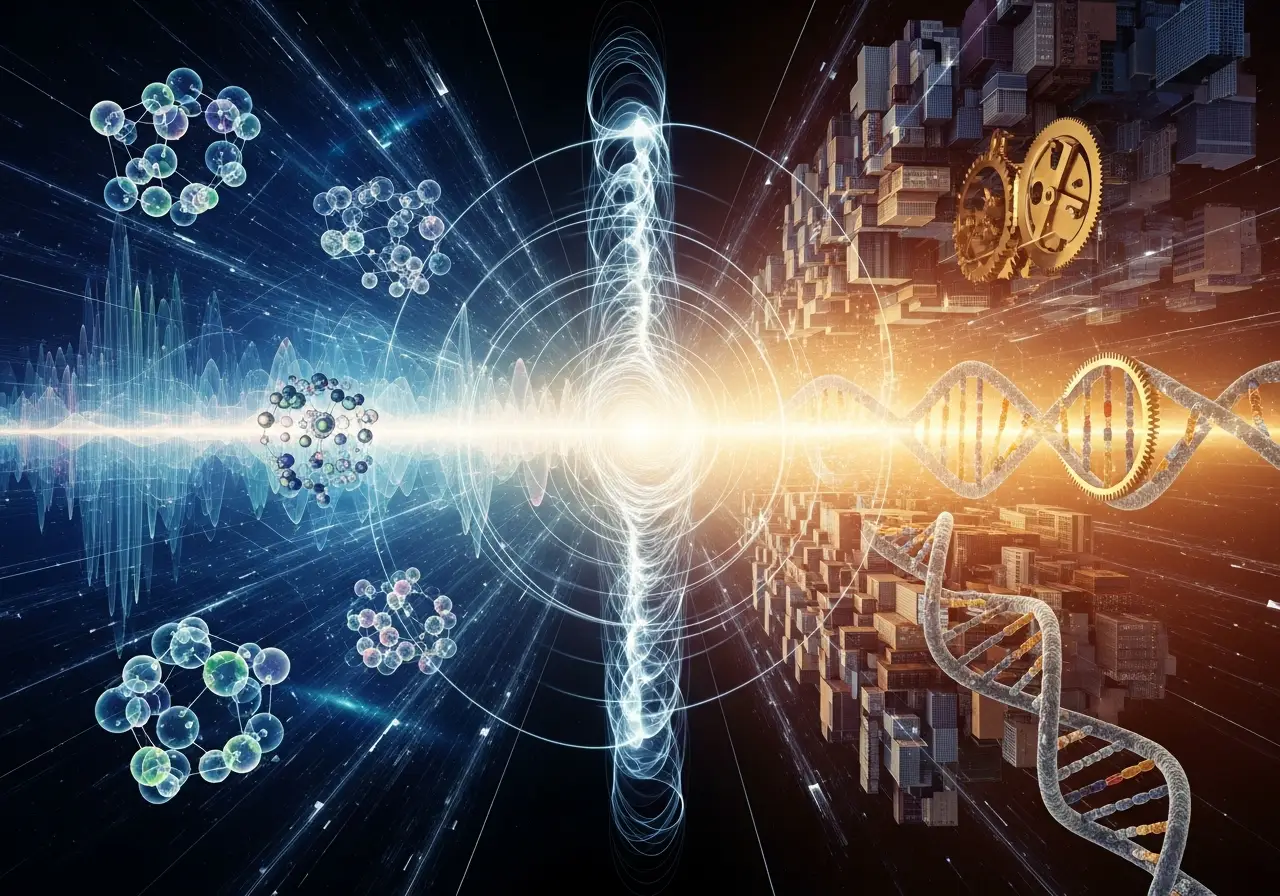

The quantum world, with all its strange and enigmatic charm, often feels like a realm that teeters on the edge of comprehension. It’s a fascinating place where particles dance in a way that our classical minds find challenging to grasp. Picture this: you’re standing at the intersection of two realities—one where particles move unpredictably, and another that follows the firm rules of Newtonian physics. It’s tempting to wonder if there’s a unifying thread that connects these two realms.
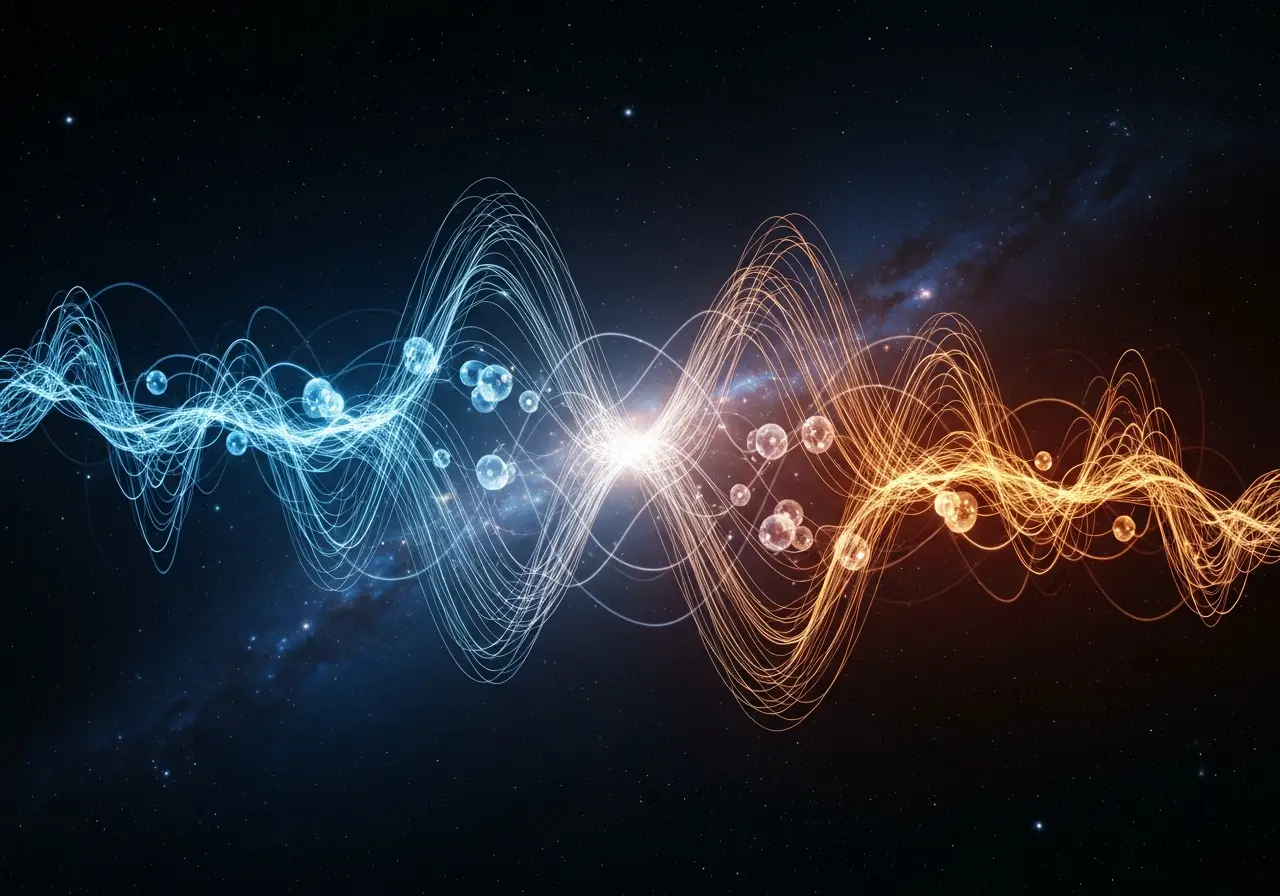
Enter the concept of coherence, a notion that might seem abstract but plays a pivotal role in both the quantum and classical worlds. If you’re familiar with music, think of coherence as the harmony that turns noise into a symphony. In the quantum realm, coherence helps particles work together in a unified state, much like musicians playing in sync. This collective behavior, emerging from chaos, might just be the link between quantum oddities and our everyday experiences.
Imagine light acting as both a particle and a wave, a phenomenon that has puzzled scientists for years. Coherence offers some clarity here; when waves of light align, they can amplify or cancel each other, revealing interference patterns that hint at deeper connections. In essence, coherence doesn’t just clarify quantum puzzles—it suggests a bridge between our tangible world and the microscopic one.
How does coherence influence the classical world we interact with daily? It offers a transition—a way for quantum effects to influence the larger systems we know and trust. As research progresses, we’re beginning to see that quantum phenomena aren’t confined to the minuscule; they can indeed ripple into our macro world, nudging us to rethink how we view reality.
Consider consciousness as another aspect of coherence—a tool that shapes how we interact with the universe. We aren’t just passive observers; our thoughts and intentions might influence the world around us. By harnessing coherent intentions, we could potentially drive changes in our external environment—a compelling idea that aligns with emerging studies on consciousness.
As scientists continue to unravel the mysteries of coherence, we’re inching closer to understanding how it binds quantum quirks with classical stability. This understanding isn’t just theoretical; it holds practical implications, especially in technology. Quantum computing, for instance, relies on qubits in superposition—leveraging coherence to perform tasks unimaginable for classical computers. Innovations in this field could revolutionize everything from medicine to astrophysics.
By embracing coherence, we position ourselves not just as spectators but as participants in the grand cosmic play. As we journey through the quantum landscape, it’s clear that the questions quantum physics poses are gateways to broader insights, allowing us to piece together a more complete view of our universe.
As you move through life, consider the unseen strands of coherence connecting us to the quantum world. By recognizing these links, we’re encouraged to embrace uncertainty and explore deeper truths about existence. So, what if you realized that understanding coherence could reshape your perception of reality? Are you ready to delve further and see the universe in a new light? The path to discovery is only just beginning.