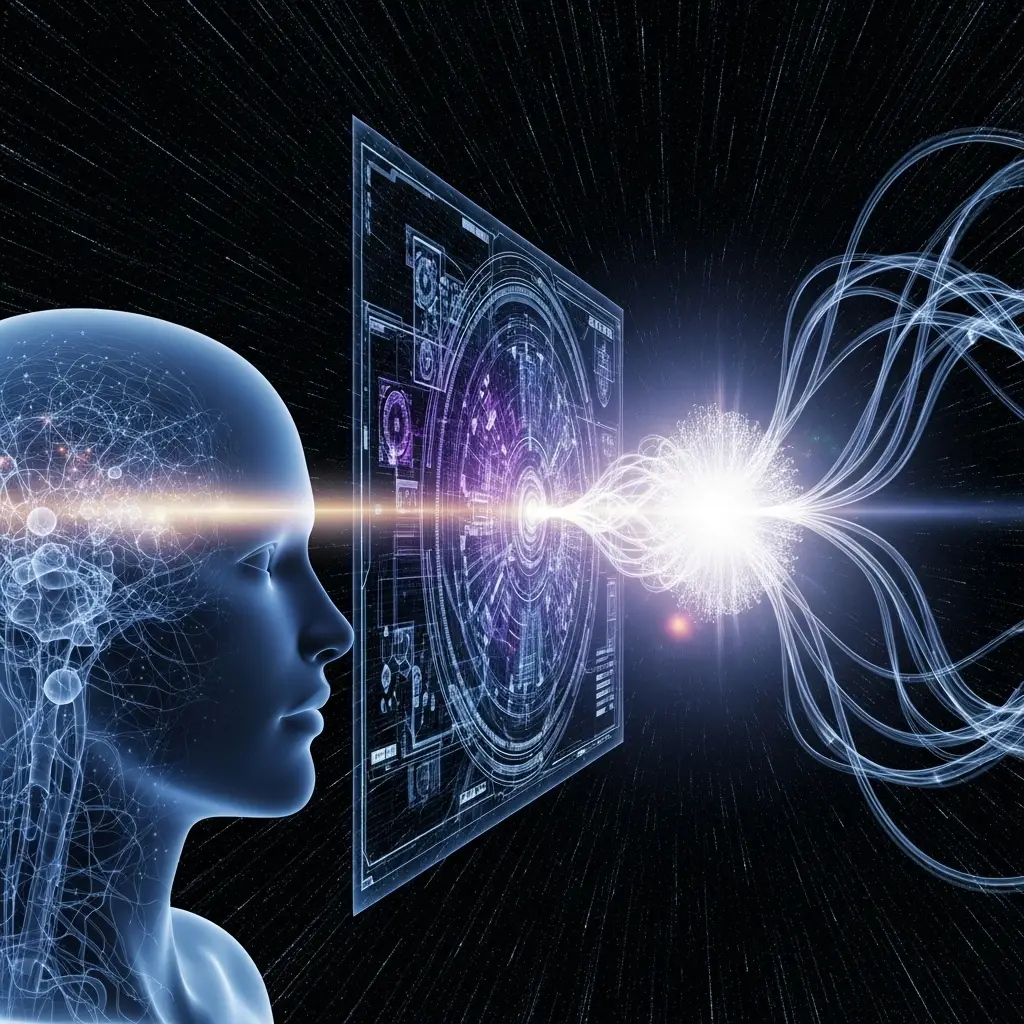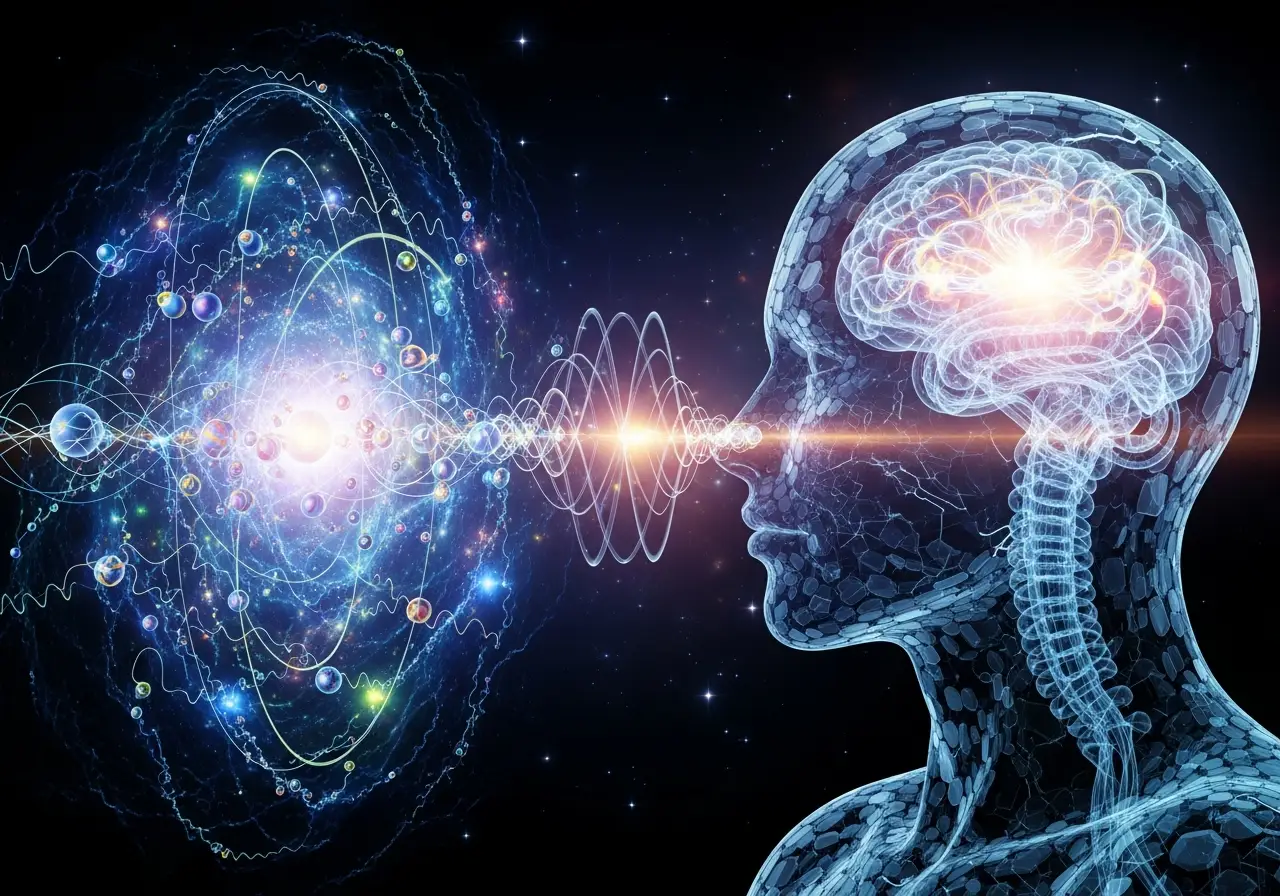

Think about a world where our understanding of human thought isn’t confined to mere neurons and synapses, but instead ventures into the strange and fascinating territory of quantum mechanics. Imagine if the way we think, feel, and comprehend could be influenced by the dance of particles at the subatomic scale. In exploring “Quantum Cognition,” we find ourselves at the crossroads of two powerful fields, uncovering new possibilities for understanding consciousness.
To embark on this exploration, put aside the rigid frameworks of classical thinking, much like trading in a tidy office for the lively mess of a painter’s studio. Traditional models of cognition, with their ordered structures, often resemble a linear conveyor belt, while quantum cognition introduces a dynamic space where ideas flutter and transform. Imagine if our minds operated not just by straightforward cause and effect, but through the layered, fluid processes akin to quantum superposition—the co-existence of multiple states that tread the line between chaos and creation.
Then there’s entanglement—where one particle’s state can instantly influence another, regardless of distance. What if our thoughts were similarly interconnected, suggesting that we’re more socially and emotionally linked than we’ve ever understood? Picture two friends, far apart, yet intrinsically connected, tuning into each other’s moods and thoughts effortlessly. This paints a picture of human connection as an intricate tapestry woven through the very fabric of reality.
Researchers are beginning to peel back the layers of this enigma, considering whether elements of quantum mechanics influence cognitive processes, possibly through structures like microtubules in the brain that exhibit quantum properties. It’s a thrilling possibility—our brains may be hubs of both biological activity and quantum interaction, bridging the gap between the tangible and the ethereal.
Skepticism remains, of course, and for good reason. Some argue that classical physics sufficiently explains cognition, leaving no room for quantum intrusions. However, if quantum principles are at play, it invites us to rethink consciousness in ways that blend the known with the speculative.
These concepts beckon questions about consciousness: does it rely on a physical vessel, or can it transcend? If every action and thought bears a quantum signature, could we learn to intentionally engage these processes for greater creativity or problem-solving? Quantum cognition challenges our understanding of free will—is our conscious experience truly autonomous, or are we part of a grander cosmic symphony?
For now, the exploration of quantum cognition remains as much a journey through the mind as it is an odyssey into the universe. Embracing this perspective doesn’t just reshape cognitive science; it invites us to reconsider our place within the interconnected fabric of existence. As we delve deeper, who knows what revelations await in the convergence of spirituality and science, offering new insights into both our internal workings and the world around us?