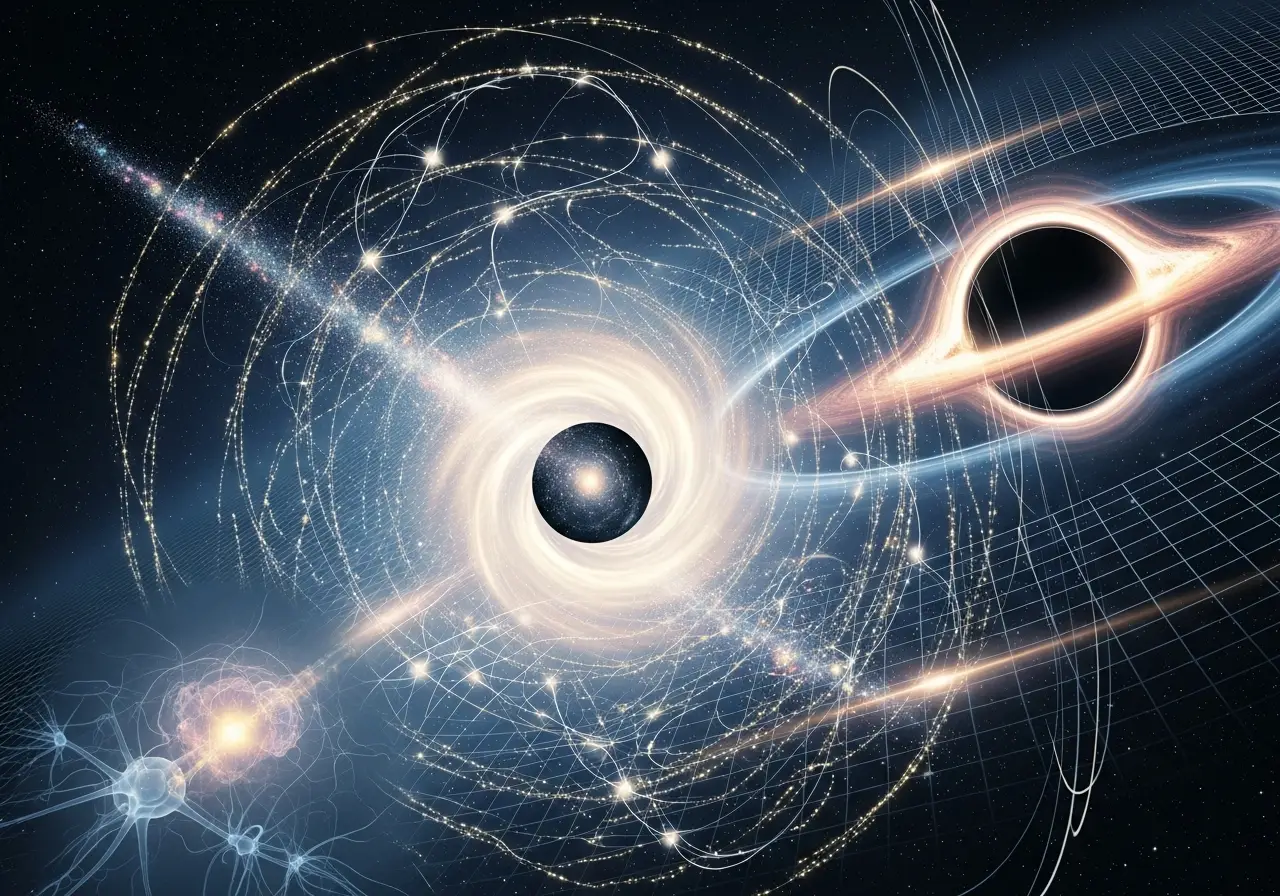

In the vast expanse of our universe, gravity serves as an unseen sculptor, shaping the very essence of reality itself. This force does more than keep us tethered to the Earth’s surface; it governs the cosmic ballet that occurs with each interaction at the quantum level. Here, at the intersection of the very large and the very small, gravity does not simply act as a stagehand. Instead, it plays a potentially decisive role in the phenomena of quantum collapse, where particles once awash in a sea of probabilities are nudged into a singular outcome.
The dance of quantum mechanics is one of staggering complexity—particles flit between states, spin around entanglements, and hover in uncertainty until an observation is made. Enter gravity, not merely as a cosmic constant, but as a disruptive force akin to a seasoned maestro. It may hold the ability to influence when and how these shimmering probabilities condense into fixed states, effectively selecting realities in its wake.
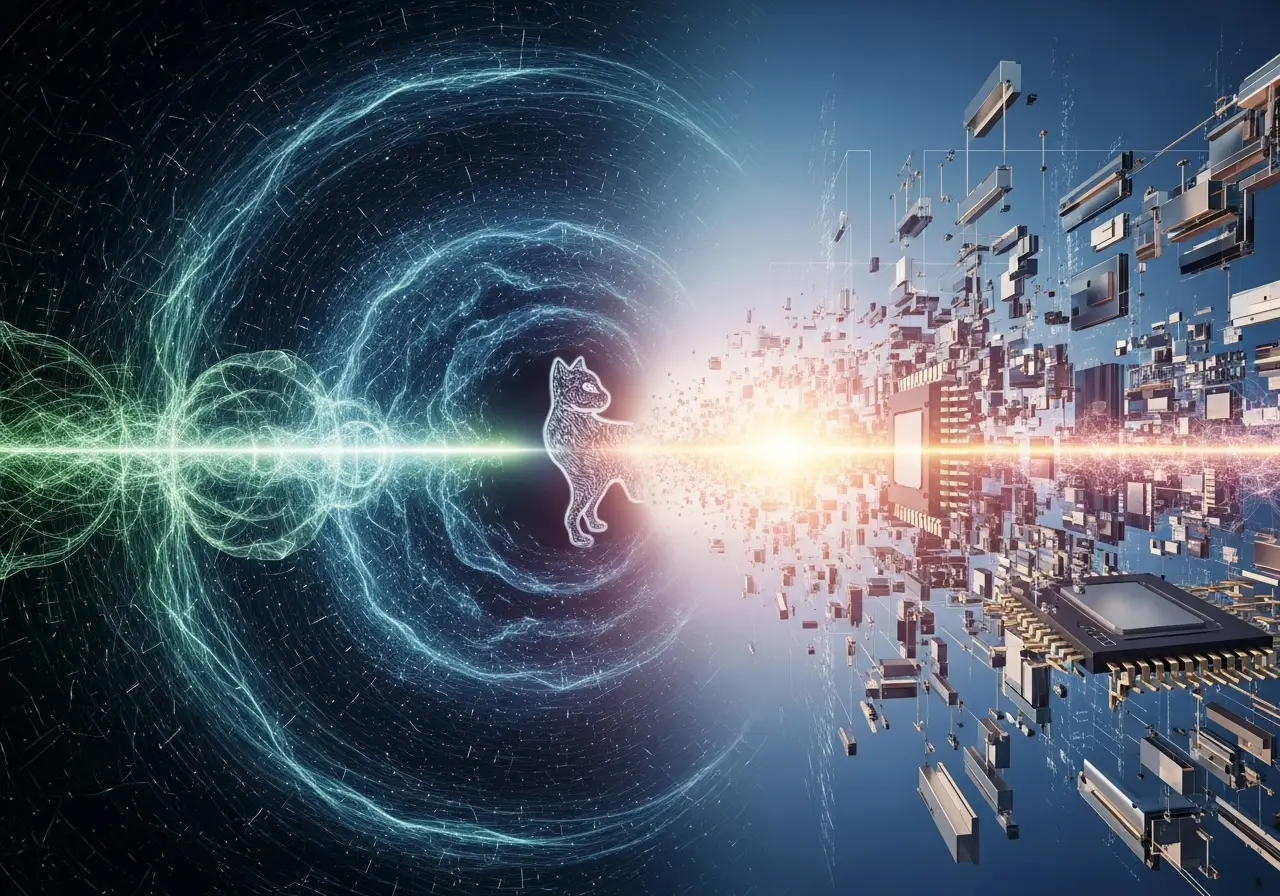
Take, for instance, the iconic double-slit experiment, a cornerstone of quantum theory. Here, particles exhibit wave-like behavior, yielding intricate interference patterns—until observed. This observation anchors them to a specific path, demonstrating the observer effect. Gravity could well serve as an ultimate observer, its pervasive influence precipitating quantum collapse without the necessity of conscious interaction.
Yet, the narrative does not end here. The enigmatic world of quantum entanglement, wherein particles link traits across astronomical distances, may contain hidden threads of gravitational influence. If gravity can warp the very fabric of space-time, it becomes conceivable that it might facilitate this seemingly immediate connection—a linkage more intimate than words could convey.
Exploring deeper into the process of decoherence, where quantum systems lose their mystical properties upon interacting with their environment, gravity unquestionably asserts its presence again. Much like a feather succumbing to the whims of the wind, particles in quantum systems might find their coherence untangled as they tango with gravitational fields. Here, gravity isn’t just a consequence of mass; it might actively guide the transition from quantum quirks to classical clarity.
Emerging theories like loop quantum gravity propose that space-time itself might be quantized, influencing particles at their most fundamental level. In this envisioned universe, gravity and quantum states engage in a reciprocal dance, each continually reshaping and rebalancing the other, suggesting a deeper, interwoven cosmos than previously imagined.
The implications of these interactions touch even the realm of human experience and consciousness. With gravity as a potential influencer of quantum states, our perceptions of reality edge into new territories. Not mere observers, we become participants in the ongoing composition of existence itself, our thoughts and actions echoing within the quantum field concurrently bound by gravitational might.
While these ideas stretch the fabric of our current understanding, they invite us to ponder the infinite connections threading through existence. They remind us not to take even the smallest forces for granted, pushing us to explore a universe teeming with unfathomable intricacies and challenges.
In essence, the gravitational pull we feel daily is a call to wonder about the hidden depths of our universe. It is an invitation to engage with the fundamental forces at play, using them as guideposts in our quest for knowledge. Gravity, it appears, is far more than a background note—it’s a playful, powerful, and perpetually intriguing partner in the grand narrative of the cosmos. Embrace its mysteries, and who knows what else we might discover, both out there in the stars and within ourselves?