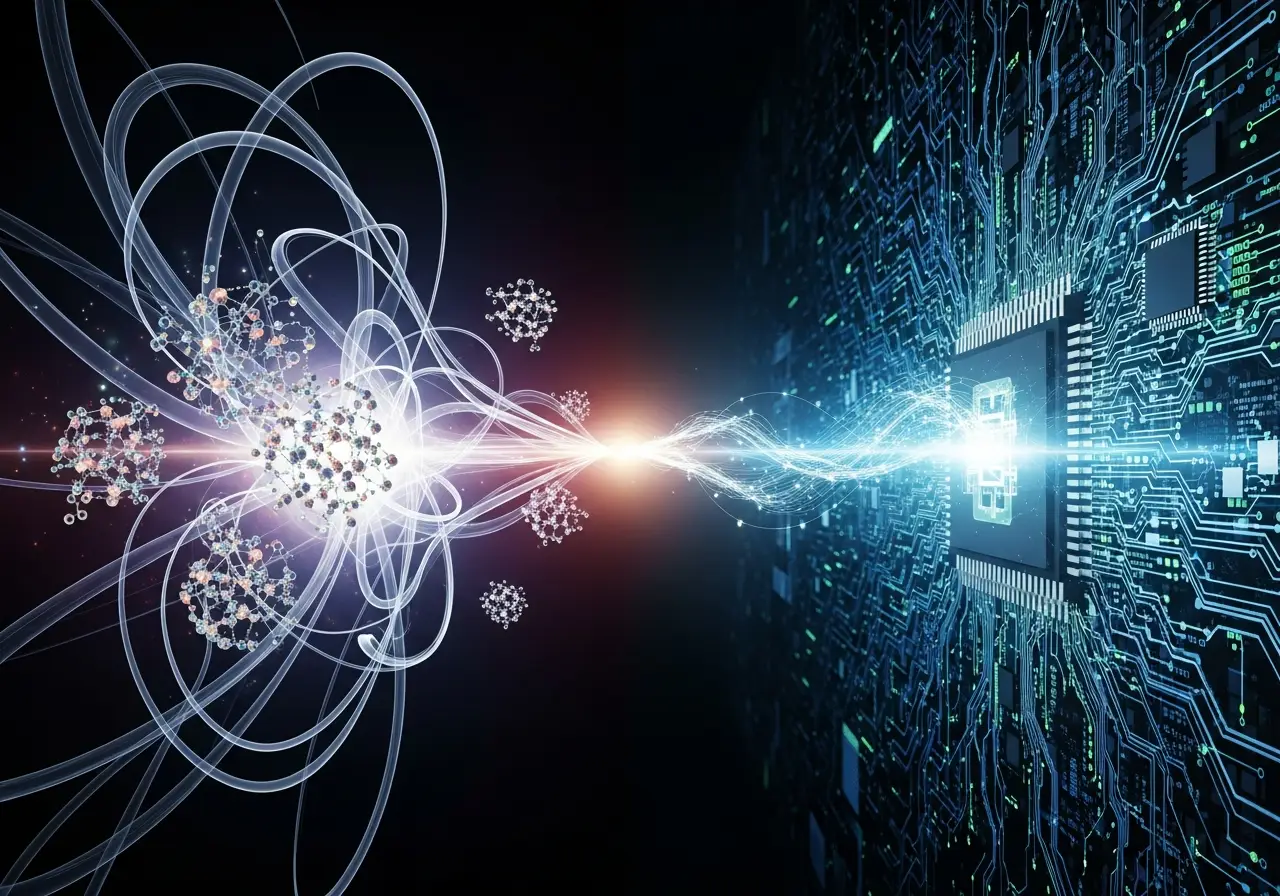

Right now, the digital world is buzzing with excitement over a new tech wave: a fascinating mix of quantum mechanics and trusty classical computing. Welcome to the realm of Hybrid Quantum-Classical Systems. These aren’t just wild ideas—they’re the cutting-edge trailblazers reshaping technology, thoroughly stirring up excitement like a meeting of the minds between a philosophical Bergman film and a turbocharged action flick.
### How Do These Hybrids Even Work?
To grasp Hybrid Quantum-Classical Systems, think of the wild differences between qubits and bits. Classical bits are our dependable data guardians, toggling between ‘0’ and ‘1’. Qubits, on the other hand, are the enigmatic chameleons of information, sitting comfortably in a superposition of both states. This gives quantum computers a nifty advantage, exploring heaps of possibilities all at once—forever changing problem-solving dynamics.
Quantum tech is still a toddler, though. It’s battling issues like high error rates and the bizarre phenomena of decoherence. Enter hybrid systems, which cleverly blend quantum and classical processors to deliver the best of both worlds. With this fusion, tackling gnarly problems in optimization, quantum simulations, and cryptographic number-crunching suddenly seems within reach.
### Real-Life Magic
What makes these hybrid systems worth the digital noise, you ask? Let’s see: in the world of pharmaceuticals, they speed up drug discovery by simulating molecular shindigs in ways classic computers can only dream about. Need a flick of magic in finance? These systems fine-tune portfolios with real-time precision. And if logistics are your jam, they’re cracking complex routing codes to make supply chains zip faster than a caffeine-fueled barista.
Even artificial intelligence can’t resist their pull—hybrid systems offer stupendous data-processing power to supercharge machine learning algorithms. Your future AI buddies will be quicker, sharper, and ready to surprise you with unprecedented smarts.
### The Path Forward
The journey of Hybrid Quantum-Classical Systems is only just beginning. With tech advancing faster than your morning espresso kicks in, researchers are diving headfirst into this quantum-classical partnership, aiming to shatter the glass ceilings of conventional computing.
Governments and savvy companies alike are throwing their hats into the ring. They recognize these hybrid champions as the next big thing and are investing tons in quantum research. The potential transformations are enormous—they could completely redefine just how we approach tech innovations and, indeed, life.
But it’s not all smooth sailing. Developing seamless algorithms to straddle both quantum and classical worlds is no walk in the park. Plus, nailing down standards, ensuring compatibility, and tightening up security—those are hurdles demanding our full attention.
### Wrapping It Up: The Quantum Leap
Hybrid Quantum-Classical Systems are like that captivating plot twist you never saw coming. They’re here to supercharge efficiency, stoke creativity, and ignite a revolution in tech and beyond. Standing at the dawn of this age gives us a chance to blend the limitless potential of quantum technology with classical computing’s tried-and-true backbone. The implications? Oh, they stretch even beyond computation—altering how we view science, medicine, finance, and the very essence of data.
So, are you gearing up to embrace the quantum era? As we dive deeper into this evolving landscape, it’s clear: these hybrid systems aren’t just refining technology; they’re sparking new ways to engage with the world around us. To echo Stephen Hawking, “Intelligence is the ability to adapt to change.” Let’s adapt and ride these infinite possibilities brought to life by Hybrid Quantum-Classical Systems.
For a more irreverent but insightful dive into tech’s future twists, check out [Firebringer AI](https://firebringerai.com).