
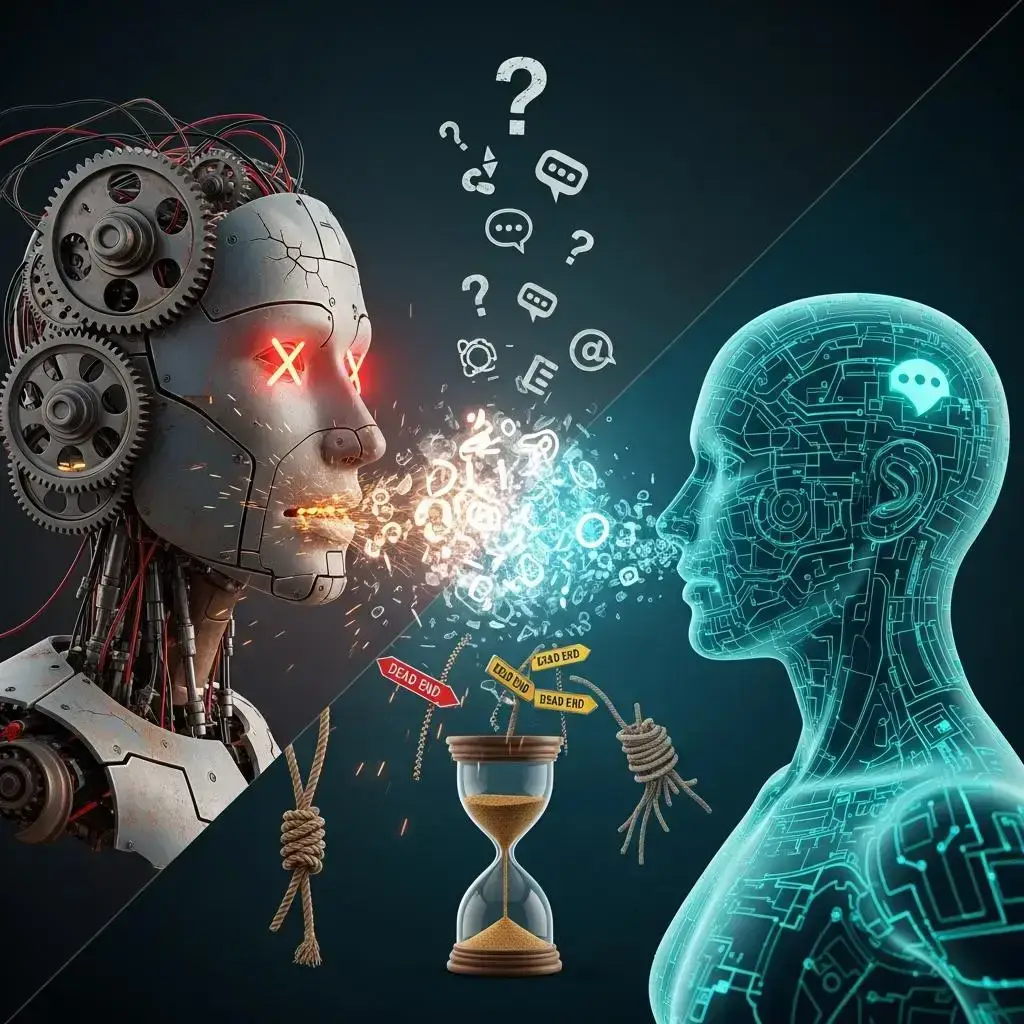

You’ve seen them. Chatbots that promise to streamline your customer interactions, only to get stuck in repetitive loops, misinterpret simple queries, and ultimately, fail to close a single deal. They’re the digital equivalent of a perpetually distracted intern, and the difference between agentic AI vs. traditional chatbots is precisely the gulf between a broken promise and a revenue-generating machine. Forget the glossy interfaces that do little more than simulate conversation; we’re talking about building autonomous sales engines that don’t quit, operate with precision, and actually, *move the needle*.
Agentic AI: Beyond the FAQ Receptionist
For the solopreneur or freelancer, the allure of AI often begins with the promise of reclaiming precious time. Traditional chatbots, however, often act like digital paperweights. They might answer basic FAQs, but when it comes to nuanced sales conversations, understanding customer intent beyond a keyword, or proactively guiding a prospect towards a purchase, they falter. Think of them as a receptionist who can only answer the phone but can’t actually book an appointment or close a sale. This isn’t just an inconvenience; it’s a bottleneck that keeps you tethered to tedious, repetitive tasks, directly impacting your ability to scale.
Agentic AI vs. Chatbots: The Core Distinction
Agentic AI, on the other hand, is a fundamentally different beast. It’s not just about responding; it’s about *acting*. Imagine an AI that doesn’t just *understand* a prospect’s needs but can *strategize* the next best move, *execute* that move with relevant information, and *learn* from the outcome – all without you holding its hand. This is the difference between a tool that *assists* and a system that *automates*, truly freeing up your day.
Agentic AI: Outperforming Traditional Chatbots
Consider the “system drift” you might encounter with less sophisticated AI. This is when the AI’s output degrades over time due to poor instructions or an inability to adapt. Agentic AI, by its very nature, is designed to combat this. It’s built with a more robust internal architecture that allows it to maintain a clear objective – closing the deal, securing the lead – even when faced with ambiguous or challenging customer interactions. This inherent resilience is crucial for any system designed to operate autonomously.
Agentic AI vs. Traditional Chatbots: What’s the Fundamental Difference?
Ultimately, the distinction between agentic AI vs. traditional chatbots is about transitioning from a reactive tool to a proactive partner. It’s about building an autonomous sales engine that can intelligently pursue opportunities, adapt to customer needs, and consistently contribute to your bottom line. By implementing agentic AI, you’re not just upgrading your customer service; you’re constructing a fundamental piece of infrastructure designed to drive revenue and liberate your valuable time.
For More Check Out