
“What Is Quantum Error Correction and How Does It Safeguard Our Quantum Future?”
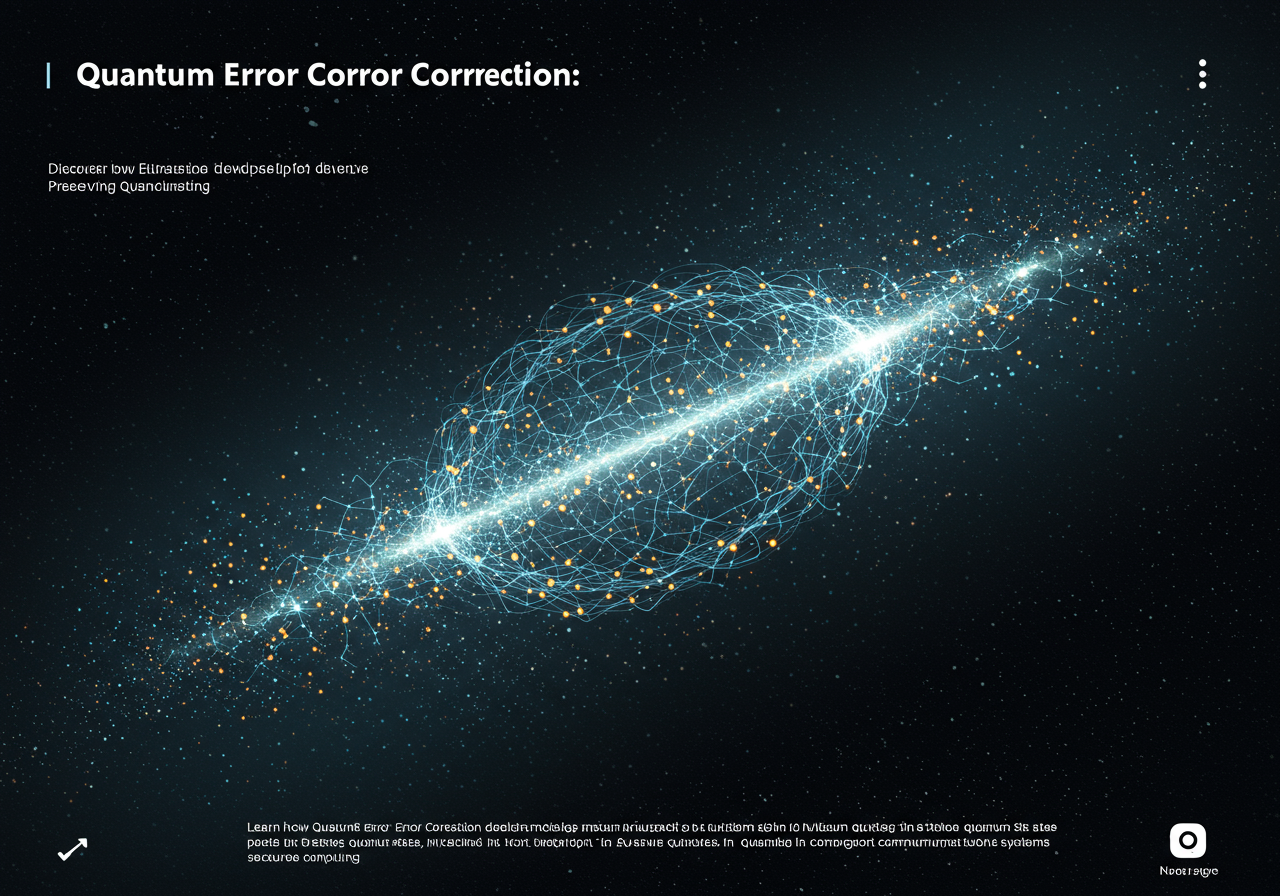
Quantum mechanics presents a unique puzzle, where the tiniest particles defy our intuitive understanding, and uncertainty is part of the equation. A critical aspect here is protecting quantum states from the inevitable noise they encounter. This is where Quantum Error Correction comes into play, acting much like a safety net for quantum information.
Let’s break it down: Imagine your treasured belongings enveloped in a protective shield that safeguards them from life’s disturbances. Quantum Error Correction achieves something similar by encoding quantum information in ways that allow it to resist disruptions. Rather than building from solid iron, it uses innovative algorithms to maintain the integrity of these fragile states.
At the heart of this field are qubits. Picture them as small, brilliant stars—each full of potential but vulnerable to interference. By applying techniques like Shor’s Code and the Steane Code, information is spread across multiple qubits. It’s similar to a safety-in-numbers scenario: if one qubit falters, the neighboring qubits hold firm and keep the collective data intact.
Although wrapping quantum states in proverbial armor seems fit for fiction, it’s a tangible scientific feat. By linking qubits through entanglement, information can be shared securely despite environmental noise. This isn’t just about keeping processes afloat; it’s about moving us toward a future where quantum computing sparks new capabilities.
Consider the potential: computations completed in seconds that would take classical computers extensive timeframes. Beyond computing, technologies could develop secure communication systems and groundbreaking materials by leveraging the strengths of Quantum Error Correction. Envision systems fortified not by complex codes, but by quantum mechanics’ natural traits, paving a new path in cybersecurity and efficiency.
Yet, the journey is challenging. Each step into Quantum Error Correction requires painstaking attention to detail, ensuring that qubits adapt with appropriate algorithms. It demands a kind of meticulous precision—each algorithm being a tool of choice in controlling the chaos innate to quantum mechanics.
Amidst learning and discovery, there’s a lighthearted side to keep in mind. Sometimes, just observing a quantum system alters it—Quantum Error Correction steps beyond observation, actively preserving coherence amidst entropy. Think of it as fitting each quantum insight with a readiness to endure—a playful nod at not just understanding but intervening in the universe’s majestic complexity.
In essence, Quantum Error Correction is akin to a guardian at the gates of quantum potential. By repelling disruptions and ensuring stability, it opens up avenues for technological leaps once deemed unreachable. Whether in computing or beyond, it’s poised to reshape how we engage with and understand our world. Rather than mere spectators, we are now enablers in the grand dance of the universe.
Leave a Reply