
“What is Quantum Cognition and How Does It Shape Our Thinking?”
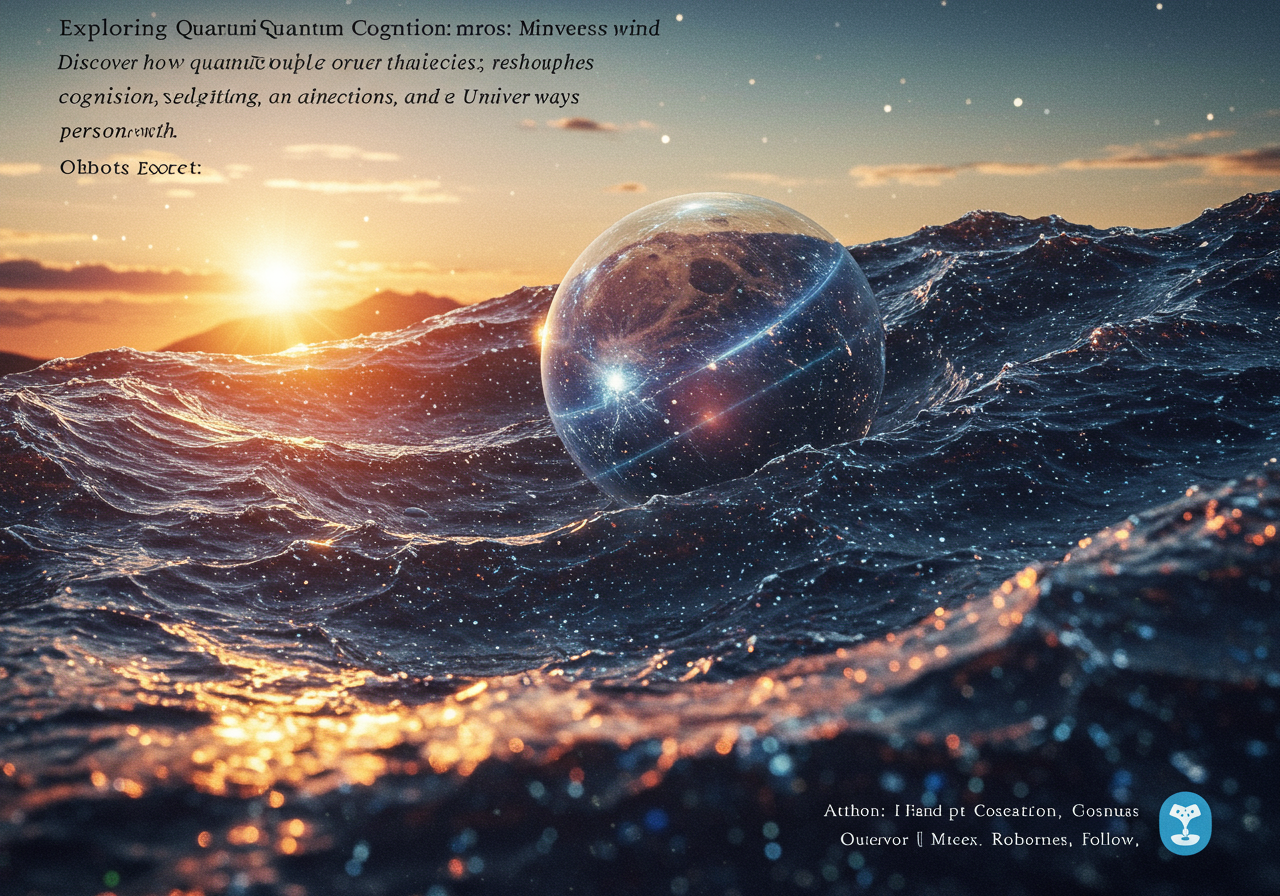
Exploring the concept of Quantum Cognition invites us to consider how our thoughts might mirror the universe’s enigmatic nature. Imagine your mind not as a strict algorithm, but as a space where possibilities intertwine, much like particles in the quantum realm. Traditional cognitive models view the brain as a linear processor, but what if our mental flow embraces quantum-like flexibility?
In the emerging field of Quantum Cognition, researchers propose that our decision-making, memory, and perceptions might reflect the core principles of quantum physics. For example, the Observer Effect suggests that simply by focusing our attention, we actively shape the reality we perceive. This idea promotes a perspective where our thoughts do more than interpret; they play an active role in the world around us.
Consider quantum entanglement—where particles remain connected despite distance. Our thoughts might connect in a similar way during shared conversations or collaborative moments, creating a mental synergy that transcends the individual. Memory, too, might align with quantum principles through its potential to transcend time and space, echoing the interconnected nature of quantum particles.
When it comes to decision-making, a quantum approach offers a perspective where choices aren’t strictly logical but layered with probabilities, reflecting a network of potential outcomes. Embracing this concept might mean that, instead of fixed paths, we engage with a fluid mental landscape.
To harness the potential of Quantum Cognition in our personal development, practices like mindfulness and meditation can enhance our mental coherence, promoting an environment open to exploring these possibilities. By focusing on the flexibility of our thoughts, we invite deeper insights and creativity into our lives.
As we reconsider how we understand and engage with cognition, the door opens to redefine our identities and connections. By embracing quantum-like dynamics, we become active participants in shaping not only our individual realities but the broader tapestry of human experience. Understanding this interplay between mind and matter might not just broaden our horizons—it may literally change our world.
Leave a Reply