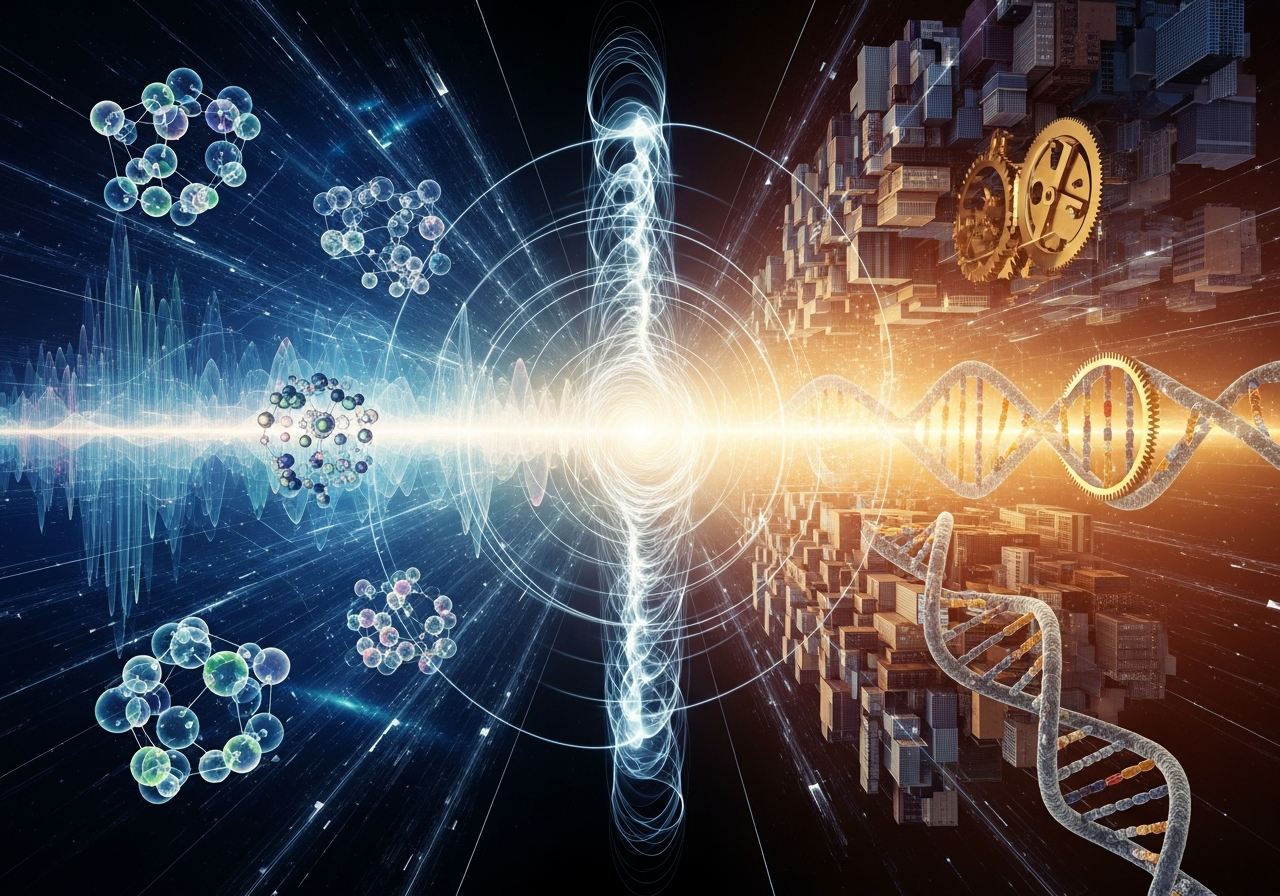

Step back from the well-worn metaphors and abstract complexities, and consider this instead: the world of quantum computing offers us a unique opportunity to witness the very boundaries of what we know about computation and consciousness. At the heart of this exploration lies the intriguing notion of Black-Box Quantum Functions. These are not just abstract puzzles but vital elements that push the boundaries of computational capability.
Imagine, for a moment, encountering a secretive code—one you can’t see in action yet can measure through its outcomes. This is what a Black-Box Quantum Function represents. Much like reading a captivating novel without seeing the writing process, it invites curiosity and pushes us to explore the mechanics of quantum algorithms without the traditional step-by-step transparency.
The excitement here isn’t just academic but practical. These black-box functions promise computational power beyond the reach of classical computers. They offer solutions to unsolvable tasks and inspire advances in fields like cryptography and drug discovery, changing how industries function. This isn’t distant sci-fi—it’s a rapidly approaching reality, with profound implications for technology and our place in the world.
Engaging with these concepts means adopting a new way of thinking. It isn’t about simply finding the right answers but learning to understand patterns that are inherently challenging to our intuition. Algorithms like Grover’s show us that this journey isn’t just about complexity but is also about elegant efficiency: one simple adjustment in your approach can revolutionize how you extract and use information.
In this sense, coherence in the quantum realm becomes a crucial theme. It’s akin to an orchestra performing in perfect harmony, essential for navigating and gleaning insights from the quantum ether. Disruptions—decoherence, in quantum terms—are the cacophonies that prevent you from hearing the symphony of solutions these mysterious functions offer.
Rather than thinking of black-box quantum functions as isolated phenomena, consider them part of a broader narrative of discovery and interaction with the universe. With each inquiry into their capabilities, we deepen our understanding of both the universe and our consciousness.
Ultimately, these explorations are not merely technical challenges; they are gateways to redefining how we perceive reality and our role within it. The journey is about more than just observing—it’s about engaging and shaping our understanding of the world. So, as we navigate the landscape of quantum oracles, let’s embrace the challenge as an opportunity for growth and transformation.