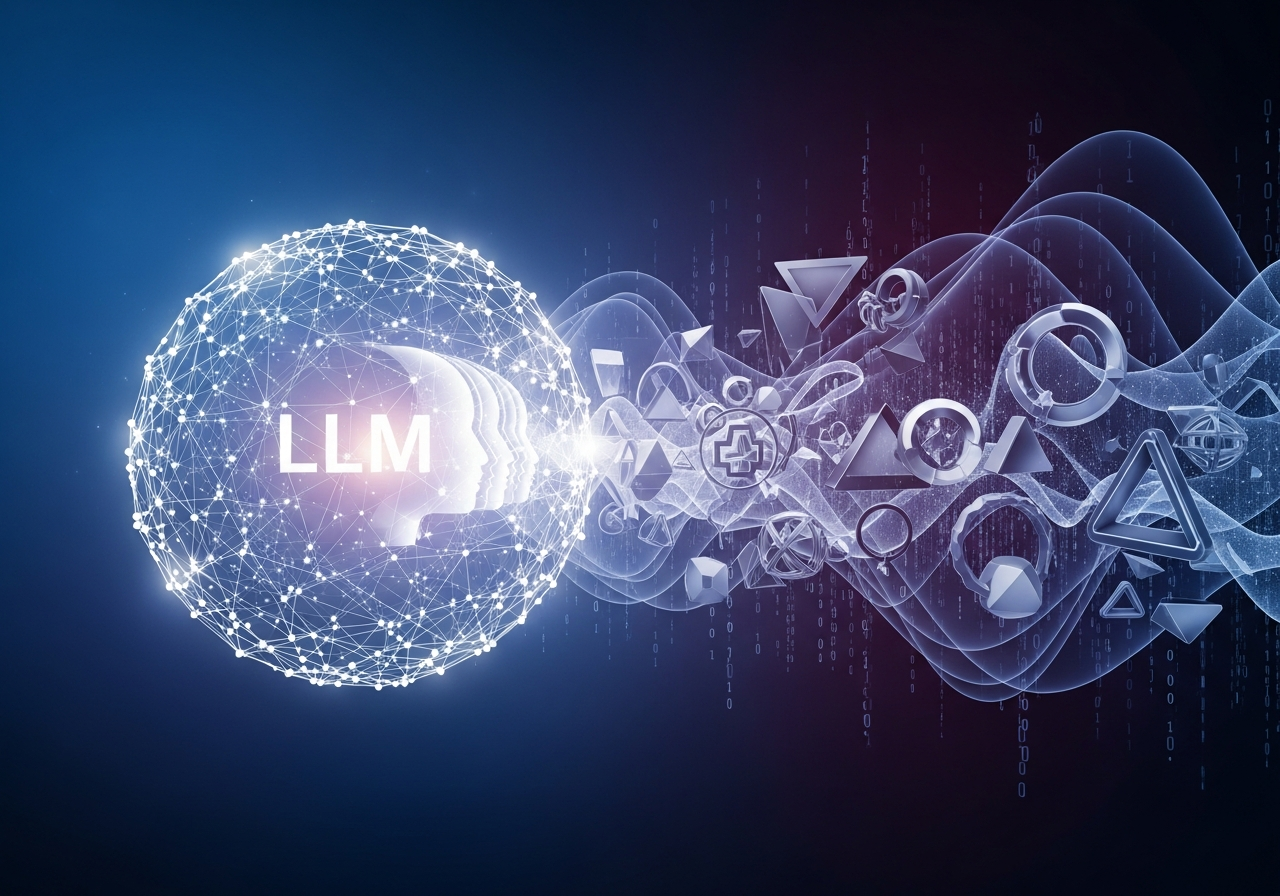

Let’s pull the veil back on these fascinating creatures we call large language models (LLMs). Picture yourself staring into a whirling vortex of binary chaos—not just numbers being crunched, but a cacophony of algorithms ready to spit out responses that might make you laugh, scratch your head, or think they’ve got a party going on upstairs. Imagine these AI marvels as digital chameleons, endlessly shapeshifting based on what you say, what you mean, and, sometimes, what you cryptically hint at in emojis.
But here’s where it gets juicy: do these LLMs really “get” us, or are they more like well-meaning extraterrestrials trying desperately to decode an Earthling’s holiday dinner etiquette? Let’s pull back the layers and figure out what drives their wild genius—and, sometimes, their eccentric blunders.
For starters, LLMs are like toddlers on a sugar rush, soaking up vast oceans of text and learning from the patterns therein. They ingest words, phrases, and the occasional awkward tweet, weaving through linguistic landscapes with a finesse that would make even seasoned polyglots pause. They’re taught through deep learning—a method that mimics how humans learn, minus the attachment to nostalgic episodes of ’90s sitcoms.
Yet, even with their impressive mimicry, LLMs can blunder. Unlike your Aunt Edna, who brings life experience and a lifetime supply of opinion to every family gathering, LLMs work strictly with algorithms. They might churn out a text response that sounds smart but misses the underlying emotional message—like sending a meme to someone who’s decidedly unamused.
Now, let’s wiggle through the labyrinth of LLM behavior: one particularly nifty trick they have is fine-tuning. This is where the magic happens. A pre-trained model gets another coat of paint tailored just for you, and voila! It starts to sound like it was born and raised in your little corner of weird. Be it shooting off code, spitting poetry, or riffing on existential quandaries, LLMs morph to fit the bill.
But with this morphability comes responsibility. LLMs are like the rockstars of AI, capable of headlining the show with game-changing innovation. Yet, they can also prompt encore questions about bias, misinformation, and privacy. Without ethical guidelines, who knows where this backstage party might end up? Transparency and fairness need to be just as important as whatever mind-bending new trick these models learn next.
Oh, and let’s not forget how the human touch still plays a role. User input shapes LLMs’ output, making it crucial to keep a watchful eye—like a dance coach making sure the routine stays snazzy and appropriate. Interacting with LLMs should bring out their best side: one that fosters collaboration, keeps things accountable, and doesn’t forget to tip the ethical bartender.
As we look forward, these LLMs offer more than shiny, new toys. They’re reshaping our digital dialogues, breaking down barriers, disrupting dinner table conversations, and offering fresh ways to tackle problems of all sorts. Imagine students engrossed in tailor-made educational journeys, or businesses upping their customer service game with a dash of LLM flair.
So, as we knit this narrative together, remember: we’re at a pivotal moment in our chatty relationship with AI. By better understanding our ever-curious digital counterparts, we can guide their evolution toward a future that doesn’t just hum along data lines, but sings in harmony with humanity.
Feeling the urge to dive deeper into the spirited world of AI? Head over to Firebringer AI, where technology shakes hands warmly with human values. This is your portal to the intersection of cutting-edge tech and what truly matters. Check us out at [Firebringer AI](https://firebringerai.com). Embrace the digital with both arms—the curtain’s up and the show’s about to start!