
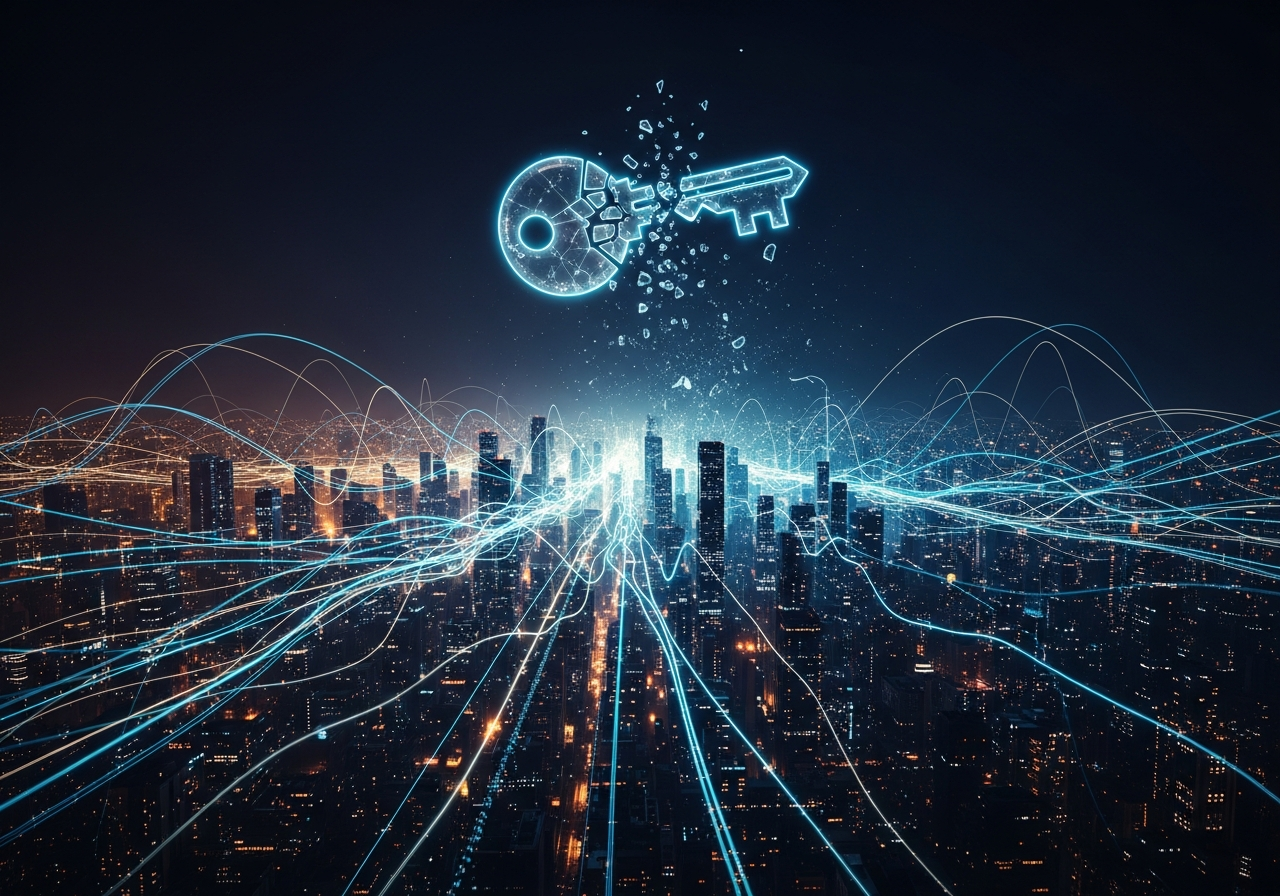

Ever thought about what would happen if the locks on your digital life suddenly vanished? Imagine your bank accounts, private chats, and personal data laid bare without the protection of the codes we’ve relied on for decades. Shor’s Algorithm, a formidable force in quantum computing, could turn this scenario into reality by deciphering encryptions once thought unbreakable. This isn’t just a hypothetical; it’s a pressing concern for digital security, calling into question our very notion of privacy.
Picture your digital world as a high-security vault, safeguarding all that’s precious and private. With the advent of Shor’s Algorithm and quantum computing, this vault could swing open. This algorithm takes on a task classical computers struggle with: integer factorization, a cornerstone of RSA encryption used to secure our online interactions. Unlike traditional methods that play a guessing game with giant prime numbers, Shor’s Algorithm, equipped with quantum capabilities, finds answers with unprecedented speed.
To grasp this, consider the quirky world of quantum mechanics. Here, particles defy traditional behavior, existing in multiple states simultaneously—rather like trying to pin down a cat that’s everywhere and nowhere at once. Shor’s Algorithm leverages this peculiar behavior, using qubits to achieve what classical bits cannot. Think of a maze where the solution can be found almost instantly, bypassing the usual winding path.
However, this breakthrough brings risks. If quantum computing matures unchecked, cryptographic systems that protect sensitive information could crumble, making data accessible to those with ill intentions. Our digital defenses must evolve, embracing innovations like lattice-based cryptography and quantum key distribution—teachniques that promise resilience in this new age.
Standing on the edge of a quantum era, we face a choice: do we adopt cutting-edge defenses, or cling to outdated models that offer diminishing security? The potential of quantum technology looms large, bringing both opportunity and danger. The quest is to balance privacy and innovation, a task requiring our collective ingenuity.
In essence, the rise of Shor’s Algorithm is a wake-up call for security professionals. It compels us to rethink how we protect sensitive data—to innovate and adapt. As we move toward this astronomical future, the path is clear: through collaboration and creativity, we must ensure our digital lives remain secure. By embracing change, we can protect our secrets and build a safer, more trusted digital future. Let’s explore this transformation further at [Firebringer AI](https://firebringerai.com), where you can delve deeper into preparing for the quantum leap in cybersecurity.