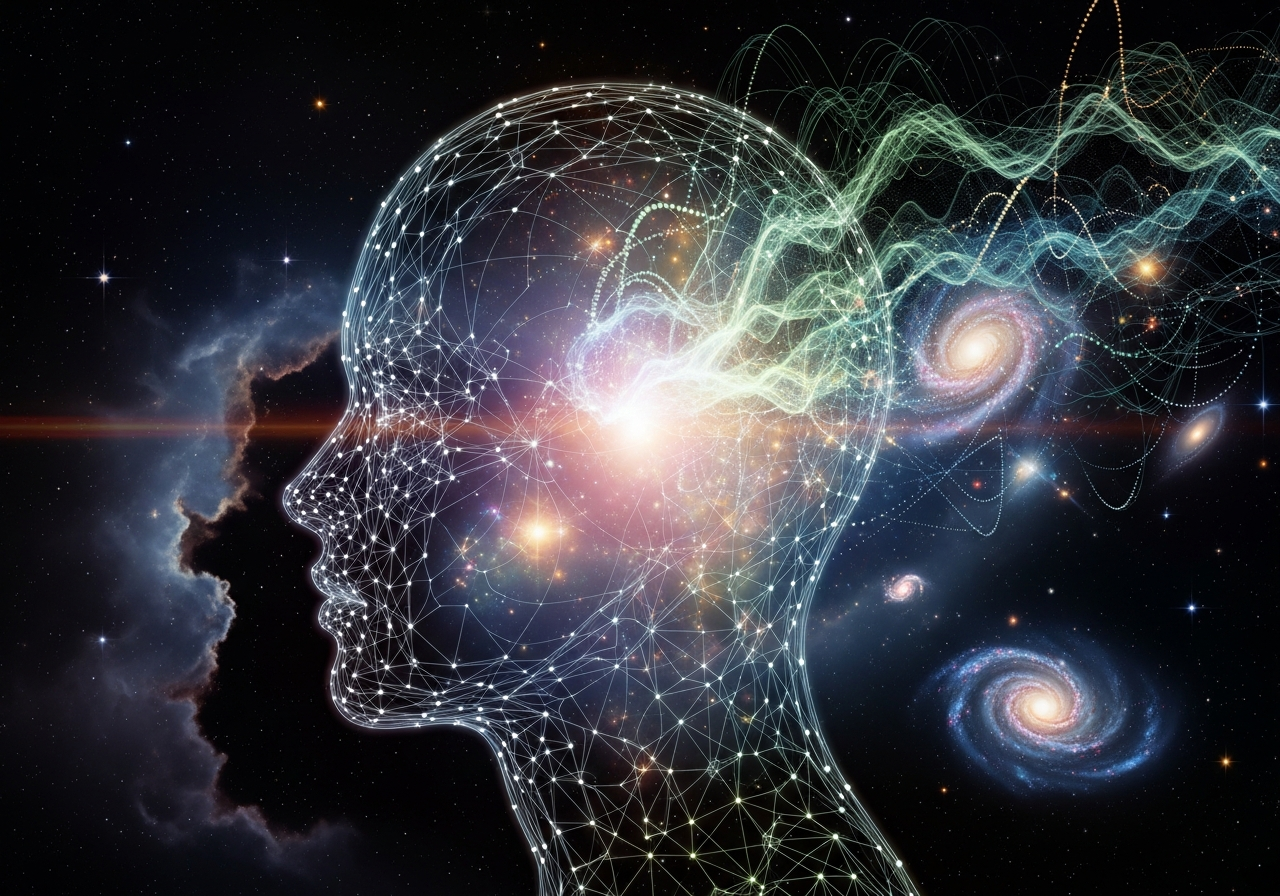
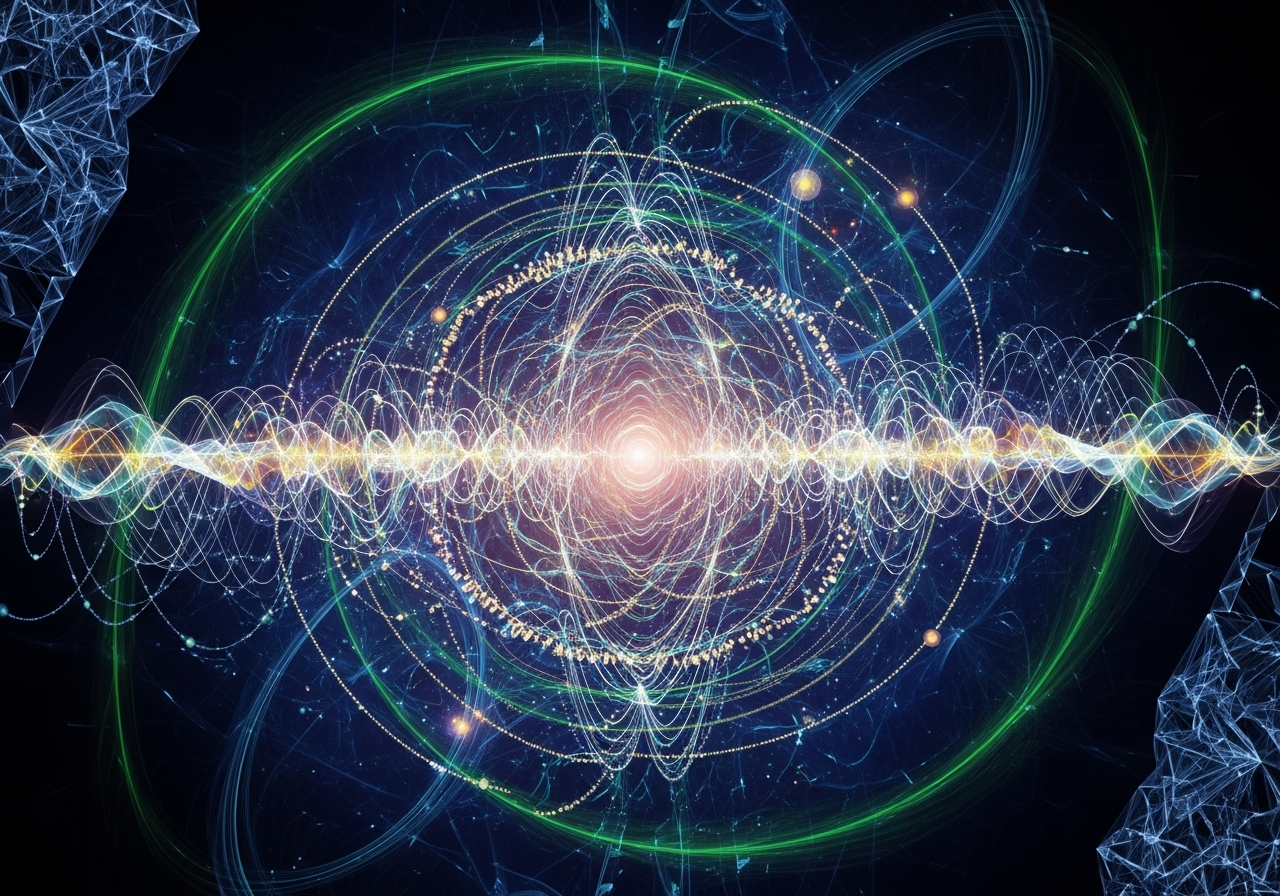

Standing at the brink of the unknown, we often find ourselves in awe of the universe’s complexities. Imagine a world where the very particles that makeup everything around us are not static but engage in a perpetual dance. Welcome to the enigmatic world of quantum oscillations, where atoms pulse with a precision that defies our usual understanding of reality. These subtle movements are more than mere curiosities; they hold the potential to unlock some of the deepest mysteries surrounding time, matter, and perhaps even the essence of existence itself.
At the heart of this concept lies the idea that particles are in constant motion, behaving like waves in a boundless cosmic ocean. Through this lens, reality becomes a symphony of shifting states—particles exist in multiple forms until observed. This dual nature offers insights into phenomena such as superposition and entanglement, suggesting an intricate design underpinning the cosmos that goes beyond what we perceive in three dimensions.
But why should this matter to you? Because these oscillations do more than challenge theoretical physics—they have real-world applications that could transform technologies and lifestyles. Imagine computers becoming exponentially faster, or advances in medicine and energy efficiency springing from our understanding of these oscillations. This isn’t just about science fiction; it’s about the future being shaped by these cosmic rhythms.
Visualizing quantum behaviors as akin to a fractal landscape, every oscillation interconnects with a larger tapestry of possibilities. Each fluctuation adds to the fabric of existence, sometimes producing moments of coherence—a harmonious alignment akin to a grand cosmic dance. These synchronizations help us understand quantum computing errors and guide development in technology reliability.
Moreover, quantum oscillations invite a reevaluation of time—not as a straightforward progression but as a dynamic interplay shaped by these energy movements. They suggest a universe that is vibrant and continually evolving, where past, present, and future converge in a cyclical flow, much like a dance where partners weave in and out with flowing synchronicity.
In contemplating these oscillations, we also reconsider consciousness and its impact on reality. The observer effect in quantum mechanics implies our very awareness might influence outcomes—a humbling reminder of our role not just as passive observers in the universe but as active participants capable of attuning ourselves to its rhythms.
And while it might seem humorous to picture the cosmos swayed by musings as simple as daydreams, there lies an inviting notion of beauty and absurdity. Like a lively dance floor, particles spin to their own complex beats, sometimes unpredictably and always fascinatingly.
In exploring quantum oscillations, we engage in more than just intellectual discovery; we connect with the fabric of reality, participating in a grand cosmic ballet. These revelations encourage us to see ourselves as part of something far greater, where every thought and action can resonate on a cosmic scale. So, with curiosity and wonder, let us continue this journey, deepening our understanding and connection with the universe that surrounds us. Ready to delve further into these mysteries? Let’s embark on this exploration together.